
Mike Tyson Net Worth 2026: From $300 Million in Purses to Bankruptcy and Back
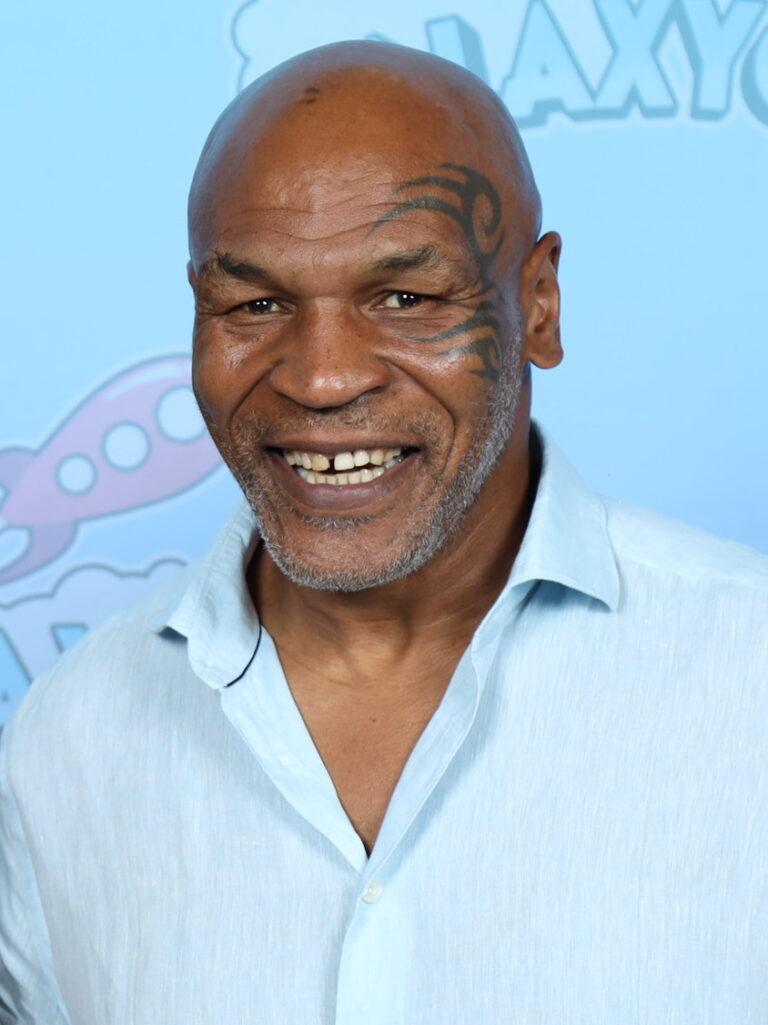
Mike Tyson Net Worth
$30 Million
Boxer, Entrepreneur Updated October 2026
People With a Similar Net Worth




Mike Tyson’s net worth is about $30 million, according to the widely reported estimate cited by Parade in January 2026. TheStreet put his fortune in a similar range of $20 million to $30 million in January 2026. Tyson does not publish his finances, so every figure is an estimate.
Mike Tyson: quick facts
- Net worth
- $30 Million
- Source of wealth
- Boxing, Tyson 2.0, media
- Profession
- Boxer, Entrepreneur
- Nationality
- American
- Place of birth
- Brooklyn, New York, United States
- Date of birth
- June 30, 1966 (age 60)
That number is small next to what he earned. Tyson collected roughly $300 million or more in fight purses during his boxing career, then filed for bankruptcy in 2003 while owing creditors tens of millions of dollars.
His comeback has been built outside the ring and in a handful of very well-paid exhibitions. A cannabis company, a popular podcast, a one-man stage show, film cameos and a reported $20 million payday against Jake Paul in 2024 have rebuilt his wealth in his fifties.
Mike Tyson at a glance
- Net worth: about $30 million (published estimates via Parade, January 2026; TheStreet estimate $20–30 million)
- Born: June 30, 1966, in Brooklyn, New York City
- Profession: former heavyweight boxing champion, entrepreneur, actor and podcaster
- Record: 50 wins (44 by knockout), 7 losses and 2 no contests as a professional
- Businesses: Tyson 2.0 cannabis brand, Carma HoldCo, the Hotboxin’ with Mike Tyson podcast
- Biggest payday: about $30 million each for his two fights with Evander Holyfield (1996 and 1997)
- Distinction: youngest heavyweight champion in history, at 20 years and 4 months
- Spouse: Lakiha “Kiki” Spicer (married 2009)
His net worth by year is charted at the end of this article.
Where Mike Tyson’s money comes from
| Source | Details | Estimate |
|---|---|---|
| Professional boxing (1985–2005) | Purses, pay-per-view shares, TV and casino deals | About $300 million or more in career purses |
| Exhibitions (2020–2024) | Roy Jones Jr. (2020) and Jake Paul (2024) | About $30 million combined (reported) |
| Cannabis business | Tyson 2.0 and parent company Carma HoldCo | Equity stake; value not disclosed |
| Media | Podcast, books, stage show, film and TV roles | Several million dollars over time |
| Real estate | Family home in the Las Vegas area | Bought for about $2.5 million in 2016 |
Mike Tyson’s biggest fight purses
Tyson was the highest-paid athlete in the world in the mid-1990s. Forbes ranked him No. 1 in 1996 with $75 million in earnings, ahead of Michael Jordan. The table below lists his best-documented paydays. Figures are the reported purses before promoter and manager cuts, expenses and taxes.
| Fight | Year | Reported purse |
|---|---|---|
| Peter McNeeley (comeback after prison) | 1995 | About $25 million |
| Buster Mathis Jr. | 1995 | About $10 million |
| Evander Holyfield I | 1996 | About $30 million |
| Evander Holyfield II (“the bite fight”) | 1997 | About $30 million |
| Lennox Lewis | 2002 | $17.5 million |
| Roy Jones Jr. (exhibition) | 2020 | About $10 million |
| Jake Paul | 2024 | About $20 million |
After his 1995 release from prison, Tyson signed contracts with Showtime and the MGM Grand that included reported signing bonuses of about $35 million. The Seattle Times later reported that he earned about $140 million in purses in the two years after his comeback.
Early life
Michael Gerard Tyson was born on June 30, 1966, in the Fort Greene section of Brooklyn. He grew up in Bedford-Stuyvesant and later in Brownsville, one of the city’s poorest neighborhoods.
He got into trouble early. By 13 he had been arrested dozens of times and was sent to the Tryon School for Boys in upstate New York. A counselor there, former boxer Bobby Stewart, saw his talent and introduced him to the trainer Cus D’Amato.
D’Amato became Tyson’s mentor. After Tyson’s mother died when he was 16, D’Amato became his legal guardian. Tyson won Junior Olympic gold medals in 1981 and 1982 and finished his amateur career with a record of 24 wins and 3 losses.
Rise to the heavyweight title (1985–1990)
Tyson turned pro on March 6, 1985, stopping Hector Mercedes in the first round in Albany, New York. D’Amato died later that year, but Tyson kept winning, most of his fights ending in the early rounds.
On November 22, 1986, he knocked out Trevor Berbick in two rounds to win the WBC title. At 20 years and 4 months, he became the youngest heavyweight champion ever. By 1987 he had unified the WBA, WBC and IBF belts.
His purses grew quickly. His 91-second win over Michael Spinks in 1988 was one of the richest fights of its time. During this period Tyson also earned money from endorsements and a video game, Mike Tyson’s Punch-Out!!, released in 1987.
The run ended in Tokyo on February 11, 1990, when 42-to-1 underdog Buster Douglas knocked him out in the 10th round, one of the biggest upsets in sports history.
Prison and the comeback (1992–1997)
In February 1992 Tyson was convicted of rape and sentenced to six years in prison. He has always maintained his innocence. He was released in March 1995 after serving less than three years.
His return was a financial event. He earned about $25 million to fight Peter McNeeley, who lasted 89 seconds. In 1996 he won back the WBC and WBA titles against Frank Bruno and Bruce Seldon.
Then came Evander Holyfield. Holyfield stopped Tyson in the 11th round in November 1996. In the June 1997 rematch, Tyson was disqualified after biting Holyfield’s ears. He was paid about $30 million for each fight, but the rematch cost him a $3 million fine and a suspension from the sport.
Lennox Lewis and the end of his career (1998–2005)
Tyson’s final big fight was against Lennox Lewis in Memphis on June 8, 2002. Each fighter was paid $17.5 million. The event sold about 1.95 million pay-per-views in the U.S. and brought in about $106.9 million, a record at the time. Lewis won by knockout in the eighth round.
His later fights were mainly about paying debts. He lost to Danny Williams in 2004 and quit on his stool against Kevin McBride on June 11, 2005, then retired, saying he had lost his passion for boxing.
The 2003 bankruptcy
Despite his purses, Tyson filed for Chapter 11 bankruptcy in August 2003. He reported about $23 million in debts; by mid-2004, court records showed he owed creditors more than $38 million, including money owed to the IRS.
Several things drained his money:
- Big cuts for his team. His promoter Don King had a contract for 30% of his earnings, and his two co-managers each had 10%. Court records showed King collected at least $65 million from Tyson’s purses and related deals.
- Heavy spending. Mansions, dozens of cars, jewelry and exotic pets, including white tigers.
- Divorce settlements and legal costs.
- Taxes owed on years of large earnings.
Tyson sued Don King for $100 million, accusing him of cheating him. In 2004 the case was settled, with King agreeing to pay about $14 million. Tyson’s bankruptcy plan relied on further fights and asset sales to pay off creditors.
Film, TV and the stage
After boxing, Tyson rebuilt his public image through entertainment. His cameo in The Hangover (2009) introduced him to a new generation, and he returned for The Hangover Part II (2011). He also appeared in Rocky Balboa (2006) and the martial arts film Ip Man 3 (2015).
Other projects include:
- Mike Tyson: Undisputed Truth, a one-man show directed by Spike Lee that ran on Broadway in 2012 and aired on HBO in 2013
- Undisputed Truth, his 2013 memoir, which became a New York Times bestseller, followed by Iron Ambition (2017), about Cus D’Amato
- Mike Tyson Mysteries, an Adult Swim cartoon that ran from 2014 to 2020, with Tyson voicing himself
- Documentaries, including James Toback’s Tyson (2008)
Tyson 2.0 and the cannabis business
Tyson has been open about his cannabis use and turned it into a business. He launched Tyson 2.0 in 2021 with entrepreneurs Chad Bronstein and Adam Wilks. The brand sells cannabis flower, vapes and edibles, including the ear-shaped “Mike Bites” gummies, a joke about the Holyfield fight.
In late 2022 Tyson 2.0 and wrestler Ric Flair’s cannabis brand were combined under one parent company, now known as Carma HoldCo. At that time the company said it had generated about $50 million in revenue in its first year, with products in more than 1,000 stores across 40 U.S. states and parts of Canada.
Tyson was named CEO of Carma HoldCo in April 2025. In December 2025 he and Flair sued former executives and a shareholder, seeking $50 million in damages. His exact ownership share and the value of the company have not been made public.
Before Tyson 2.0, he backed Tyson Ranch, a California cannabis venture announced in the late 2010s.
Hotboxin’ with Mike Tyson
In 2019 Tyson launched the podcast Hotboxin’ with Mike Tyson, an often loose conversation show with athletes, musicians, actors and fighters. Its YouTube channel had about 3.9 million subscribers and more than 460 million total views as of early 2026, according to TheStreet.
The show earns money from advertising and sponsorships. Its revenue has not been disclosed, but it keeps Tyson in front of a young audience and supports his other businesses.
Exhibitions: Roy Jones Jr. and Jake Paul
At 54, Tyson returned to the ring for an eight-round exhibition with Roy Jones Jr. on November 28, 2020, in Los Angeles. It was scored a draw. Tyson was reportedly guaranteed about $10 million, and the event was the best-selling pay-per-view of 2020.
His biggest late-career payday came against YouTuber-turned-boxer Jake Paul on November 15, 2024, at AT&T Stadium in Arlington, Texas. The fight was moved from July after Tyson had an ulcer flare-up. Paul won a unanimous decision over eight rounds.
- Tyson’s purse: about $20 million (reported; never officially confirmed)
- Paul’s purse: about $40 million (Paul’s own claim)
- Gate: about $17.8 million, the biggest for a boxing event in the U.S. outside Nevada
- Audience: streamed live on Netflix, which said tens of millions of households watched worldwide
In September 2025 Tyson and Floyd Mayweather Jr. announced plans for an exhibition in 2026. Tyson broke his hand in training in March 2026, and promoter CSI Sports pushed the bout to the fall. No purse has been reported.
Real estate
Tyson owned several large homes at his peak and sold most of them during his money troubles.
| Property | Year | Reported price |
|---|---|---|
| Southington, Ohio mansion (about 13,500 sq ft) | Owned 1980s–1990s | Later sold for a reported $1.3 million |
| Farmington, Connecticut mansion | Bought 1996 | $2.7 million; sold by his ex-wife to 50 Cent for $4.1 million in 2003 |
| Henderson, Nevada (Seven Hills) home | Bought about 2008 | $1.75 million; sold for $1.475 million in 2016 |
| Henderson, Nevada (Seven Hills) villa | Bought 2016 | About $2.5 million |
The Ohio mansion, which once had tiger cages, sat empty for years and was later taken over by a small church. The Connecticut estate went to Monica Turner in their 2002 divorce and was sold to the rapper 50 Cent the next year. Tyson and his family now live in the Las Vegas suburb of Henderson.
Personal life
Tyson has been married three times:
- Robin Givens, actress, married 1988; they separated within a year
- Monica Turner, a pediatrician, married 1997 and divorced 2003
- Lakiha “Kiki” Spicer, married in June 2009
He has seven children, one of whom has died. His four-year-old daughter Exodus died after a household accident in May 2009.
Tyson has spoken publicly about addiction and sobriety. He has also become known for his love of racing pigeons, a hobby he picked up as a child in Brooklyn.
Philanthropy
In 2012 Tyson and his wife launched the Mike Tyson Cares Foundation, which supports children from broken homes. He has also taken part in charity events and fundraisers through his podcast and business partners.
How Mike Tyson compares
Reliable net worth figures are rare for boxers, so the clearest comparison is earnings. Here is how Tyson’s best year stacks up against other fighters on Forbes’ highest-paid athletes lists.
| Boxer | Best Forbes year (earnings) | Main source |
|---|---|---|
| Floyd Mayweather Jr. | $300 million (2015 list) | Pacquiao fight pay-per-view |
| Mike Tyson | $75 million (1996 list) | Comeback purses |
| Evander Holyfield | $54.3 million (1997 list) | Tyson fights |
| Oscar De La Hoya | $38 million (1997 list) | Fight purses |
Figures are Forbes earnings estimates for the year shown, before taxes and fees. Tyson’s 1996 total made him the world’s highest-paid athlete that year. For more fighters and stars, see our athlete net worth profiles.
Frequently asked questions
How much is Mike Tyson worth?
About $30 million, based on the estimate cited by Parade in January 2026. TheStreet puts his fortune at $20 million to $30 million.
How much did Mike Tyson earn in his career?
Roughly $300 million or more in boxing purses, with some estimates above $400 million when endorsements are included.
Why did Mike Tyson go bankrupt?
He filed for bankruptcy in 2003 after years of heavy spending, large cuts to his promoter and managers, divorce costs and unpaid taxes. He reported about $23 million in debts.
How much did Mike Tyson make fighting Jake Paul?
A reported $20 million. The figure was never officially confirmed. Jake Paul said he earned about $40 million.
What was Mike Tyson’s biggest payday?
His two fights with Evander Holyfield in 1996 and 1997, which paid him about $30 million each.
Does Mike Tyson own a cannabis company?
Yes. He co-founded the cannabis brand Tyson 2.0 in 2021 and became CEO of its parent company, Carma HoldCo, in 2025.
Sources: published estimates (via Parade, January 2026), TheStreet (January 2026), Forbes highest-paid athletes lists (1996, 1997, 2015), The Seattle Times, Fortune, Honolulu Star-Bulletin, Las Vegas Sun, Cannabis Equipment News, theScore, Wikipedia. All net worth and earnings figures are estimates.