
Jackie Chan Net Worth 2026: Forbes Paydays, Karate Kid: Legends and a Fortune Bound for Charity
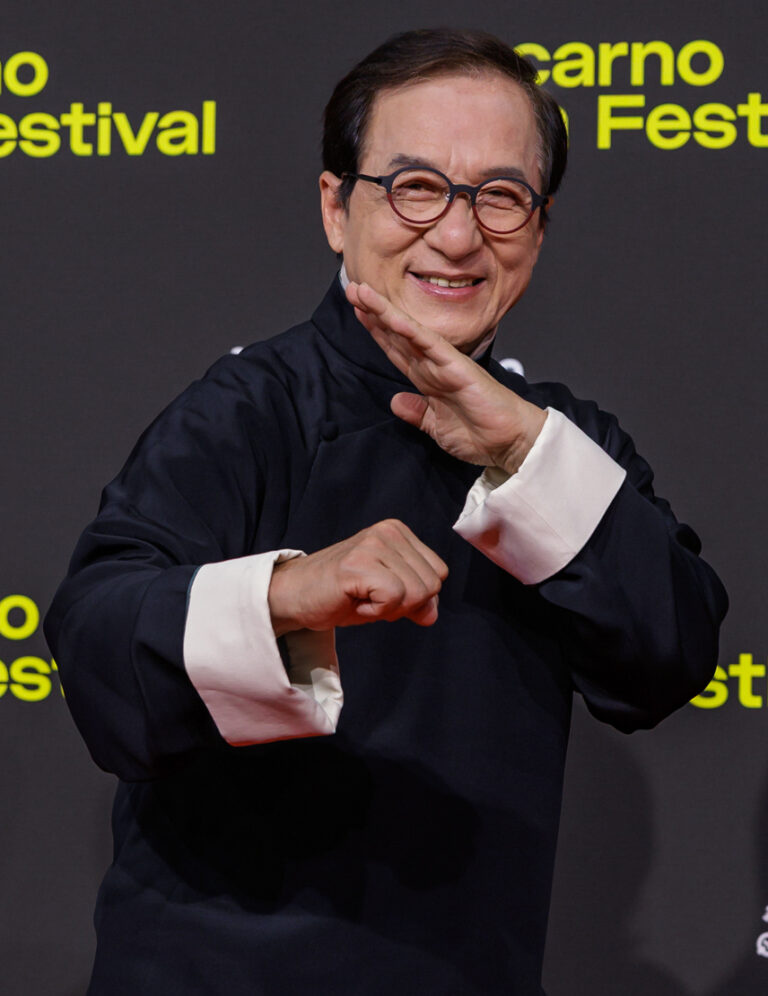
Jackie Chan Net Worth
$400 Million
Actor, Stuntman, Director, Producer Updated October 2026
People With a Similar Net Worth




Jackie Chan’s net worth is about $400 million, according to the widely reported estimate cited by outlets such as Cosmopolitan and TheStreet in 2023 and 2025. Forbes put his fortune at about $350 million in the mid-2010s, when he was one of the highest-paid actors in the world.
Jackie Chan: quick facts
- Net worth
- $400 Million
- Source of wealth
- Films, producing and endorsements
- Profession
- Actor, Stuntman, Director, Producer
- Nationality
- Chinese (Hong Kong)
- Place of birth
- Victoria Peak, Hong Kong, China
- Date of birth
- April 7, 1954 (age 72)
Chan’s money comes from more than 60 years of work in film. He has starred in, directed, produced and choreographed action films in Hong Kong, mainland China and Hollywood. Forbes once estimated that his films had grossed about $2.6 billion worldwide.
He is still working at 72. In 2025 he returned as Mr. Han in Karate Kid: Legends, scored a Chinese box office hit with The Shadow’s Edge, and in 2026 started shooting Armour of God IV: Ultimatum. He has also said for years that he plans to give his fortune to charity rather than leave it to his son.
Jackie Chan at a glance
- Net worth: about $400 million (widely reported estimate, 2023–2025)
- Born: April 7, 1954, in Victoria Peak, British Hong Kong
- Birth name: Chan Kong-sang
- Profession: actor, stuntman, director, producer, martial artist and singer
- Key companies: JCE Movies, Jackie Chan Cinema (with Sparkle Roll Group), Jackie Chan Design, JC Group China
- Best Forbes year: $61 million in 2016, No. 2 among the world’s highest-paid actors
- Biggest reported film fee: about $15 million for Rush Hour 3 (2007)
- Awards: Honorary Academy Award (2016), star on the Hollywood Walk of Fame, MBE (1989)
- Spouse: Taiwanese actress Joan Lin (married 1982)
His net worth over time is shown in the chart on this page.
Where Jackie Chan’s money comes from
| Source | Details | Estimate |
|---|---|---|
| Film acting fees | Hollywood and Chinese films since the 1970s | Up to about $15 million per film at his Hollywood peak |
| Producing and directing | Producer credits and back-end shares on his Chinese films | A large part of his 2015–2019 income |
| Endorsements | Brand deals, mostly in mainland China and Asia | Most of his $40 million in 2020, per Forbes |
| Cinemas | Jackie Chan Cinema chain in China | Not disclosed |
| Other businesses | Clothing, restaurants, cafes, gyms, motorsport team | Not disclosed |
| Real estate | Homes in Hong Kong, Beijing and Singapore; former Beverly Hills mansion | Tens of millions of dollars |
Forbes annual earnings
Forbes ranked Chan among the world’s highest-paid actors for six straight years. Its figures cover 12 months of pre-tax earnings, before fees for agents and managers. Unlike most stars on the list, Chan made most of his money from Chinese films, producer deals and endorsements, not Hollywood paychecks.
| Forbes list | Earnings | Rank | Main driver |
|---|---|---|---|
| 2015 | $50 million | No. 2 | Dragon Blade and Chinese film deals |
| 2016 | $61 million | No. 2 | Skiptrace, Kung Fu Panda 3, endorsements |
| 2017 | $49 million | No. 5 | Kung Fu Yoga, Railroad Tigers |
| 2018 | $45.5 million | No. 5 | Six films released, including The Foreigner |
| 2019 | $58 million | Top 5 | Chinese films and endorsements |
| 2020 | $40 million | No. 10 | Mostly endorsement deals |
That adds up to more than $300 million in pre-tax earnings over six years. In 2015 and 2016 only Robert Downey Jr. and Dwayne Johnson, respectively, out-earned him. Chan was the top-earning Asian actor on every one of these lists.
Reported film salaries
Few of Chan’s film fees have been made public. These are the ones reported by major outlets:
| Film | Year | Reported fee |
|---|---|---|
| Rush Hour 2 | 2001 | About $10 million (The Globe and Mail) |
| Rush Hour 3 | 2007 | About $15 million, pay-or-play (Fox News, 2006); some later reports say about $20 million |
| Rush Hour 4 (in development) | 2026 | About $8 million offered; not accepted as of April 2026 (Puck) |
| Karate Kid: Legends | 2025 | Not disclosed |
For Rush Hour 2, co-star Chris Tucker reportedly earned about twice as much as Chan. Reports say Chan’s Rush Hour deals also included a share of profits and some international distribution rights, so his upfront fee was only part of what he earned.
Early life
Chan Kong-sang was born on April 7, 1954, in Hong Kong. His parents, Charles and Lee-lee Chan, had fled mainland China during the Chinese Civil War. They worked as a cook and a housekeeper at the French consul’s residence on Victoria Peak.
The family was poor. In 1960, when he was 6, Chan was sent to the China Drama Academy, a Peking Opera school. He trained there for about ten years in martial arts, acrobatics, singing and acting, under a famously strict master.
At the school he joined a performing group called the Seven Little Fortunes, alongside future stars Sammo Hung and Yuen Biao. He also appeared as a child actor, starting with Big and Little Wong Tin Bar in 1962.
Stuntman to Hong Kong star (1970s)
After leaving the academy, Chan worked as a stuntman and extra in Hong Kong’s booming martial arts film industry. He appeared in the background of Bruce Lee’s Fist of Fury (1972) and Enter the Dragon (1973).
His break came in 1978 with two films directed by Yuen Woo-ping: Snake in the Eagle’s Shadow and Drunken Master. Instead of copying Bruce Lee’s serious style, Chan mixed kung fu with slapstick comedy. Audiences loved it.
In 1979 he directed his first film, The Fearless Hyena. He then signed with Golden Harvest, Hong Kong’s leading studio, which would release his films for the next two decades.
Golden Harvest years and Police Story (1980s–1990s)
At Golden Harvest, Chan became Asia’s biggest box office star. His hits included The Young Master (1980), Project A (1983), Armour of God (1986) and Drunken Master II (1994).
Police Story (1985) became one of his signature films and spawned a long series. Its stunts, including a slide down a light-covered pole through a shopping mall, set a new standard for action films.
Chan did most of his own stunts and paid for it with many injuries. He nearly died after a fall during the filming of Armour of God in 1986. He also founded the Jackie Chan Stunt Team, which trained and worked on his films.
His early attempts to break into Hollywood, such as The Big Brawl (1980) and The Protector (1985), did not succeed. That changed when Rumble in the Bronx (1995) became a surprise hit in the United States in 1996.
Hollywood success: Rush Hour and Shanghai Noon
Rush Hour (1998), with Chris Tucker, made Chan a Hollywood star. It earned about $130 million in the U.S. alone. The franchise went on to gross about $845 million worldwide across three films.
He followed it with the Western comedy Shanghai Noon (2000) with Owen Wilson and its sequel Shanghai Knights (2003). Rush Hour 2 (2001) was the biggest of the series, and Rush Hour 3 (2007) brought him his largest reported paycheck.
He also worked in animation. Chan voiced Master Monkey in the Kung Fu Panda films and Splinter in Teenage Mutant Ninja Turtles: Mutant Mayhem (2023). The cartoon series Jackie Chan Adventures (2000–2005) brought him a new generation of young fans.
The Karate Kid and China’s film boom (2010s)
In 2010 Chan played maintenance man and kung fu teacher Mr. Han in The Karate Kid, opposite Jaden Smith. The remake was a big hit, grossing more than $350 million worldwide.
After that, Chan focused mostly on the fast-growing Chinese market. Films such as CZ12 (2012), Dragon Blade (2015), Kung Fu Yoga (2017) and Bleeding Steel (2017) were made for Chinese audiences, often with Chan as a producer. This is the period when Forbes ranked him among the world’s top-paid actors.
He also took more serious roles. In The Foreigner (2017) he played a grieving father opposite Pierce Brosnan, a rare dramatic part for him.
In 2016 he received an Honorary Academy Award for his achievements in film. He was the first Chinese actor to receive the honor.
Recent work: Karate Kid: Legends and beyond (2023–2026)
Chan’s recent films show he is still bankable in both China and Hollywood:
- Hidden Strike (2023): an action film with John Cena released on Netflix
- Ride On (2023): a drama about an aging stuntman and his horse
- Panda Plan (2024): an action comedy in which Chan plays himself
- The Shadow’s Edge (2025): a crime thriller that topped the Chinese box office for weeks and grossed about $159 million worldwide; Chan announced a sequel in January 2026
Karate Kid: Legends (2025)
Karate Kid: Legends opened in U.S. theaters on May 30, 2025, through Sony Pictures. It brought Chan’s Mr. Han together with Ralph Macchio’s Daniel LaRusso for the first time, with Ben Wang as the new student.
The film cost about $45 million to make and grossed about $117 million worldwide. Reviews were mixed, but audiences gave it an A- CinemaScore. It later streamed on Netflix. Chan’s fee was not disclosed.
Rush Hour 4 and Armour of God IV
In November 2025, Paramount reportedly agreed to distribute Rush Hour 4 after President Donald Trump asked the studio to take it on. In April 2026, Puck reported that Chan and Chris Tucker had each been offered about $8 million to return, far below their earlier fees, and that neither deal was done.
In July 2026, Chan began filming Armour of God IV: Ultimatum in Kazakhstan, with more scenes planned in Azerbaijan and Hong Kong. It is the first film in the series he is not directing. Release is planned for February 2027.
Business ventures and endorsements
Chan has built a wide range of businesses around his name:
- JCE Movies Limited: his film production company, formed in 2003 with Emperor Multimedia Group after Golden Harvest stopped making films
- Jackie Chan Cinema: a chain of movie theaters in mainland China, run with Sparkle Roll Group; Forbes listed it as one of his income sources
- Jackie Chan Design: a clothing and accessories brand, first launched in 2004
- Food and fitness: Jackie’s Kitchen sushi restaurants, Jackie Chan Cafe and Jackie Chan Signature Club gyms
- Holding and production companies: JC Group China, Jackie & Willie Productions and Jackie & JJ Productions
- Jackie Chan DC Racing: a motorsport team formed in 2016 that competed in endurance racing, including Le Mans
Endorsements have been a major earner, especially in China. Forbes said most of his $40 million in 2020 came from brand deals. He has promoted everything from cars and phones to shampoo and property developments.
Real estate
Chan has owned homes in several countries. Only a few deals have public prices:
| Property | Year | Reported price |
|---|---|---|
| Beverly Hills mansion, California (7,600 sq ft) | Bought 1998 | Later listed for about $6.7 million |
| Two Beijing luxury apartments (13,000+ sq ft total) | Agreed 2006 | 13 million yuan (about $1.9 million); market value later put above $14 million |
| Three units at Centennia Suites, Singapore | 2010 | Part of a deal worth more than S$10 million, shared with Emil Chau |
| Hong Kong converted factory (home, office and gym) | 2000s | Not disclosed |
The Beijing apartments became tangled in a dispute between two developers. They were seized in 2017 over the seller’s debts, and a court auction was listed in 2020 with a starting price of about $10.5 million. The auction was later called off.
Personal life
Chan married Taiwanese actress Joan Lin in December 1982. Their son, singer and actor Jaycee Chan, was born the next day. In 2014 Jaycee was arrested in Beijing on drug charges and served six months in jail; Chan publicly said he was ashamed and apologized.
Chan also has a daughter, Etta Ng, born in 1999 to former actress Elaine Ng.
Away from film, Chan is a recording artist with many Cantonese and Mandarin albums. He sang at the closing ceremony of the 2008 Beijing Olympics and carried the torch in Paris ahead of the 2024 Paralympic Games. His memoir, Never Grow Up, came out in English in 2018.
Philanthropy
Chan is one of the most active givers in Asian entertainment. Highlights include:
- The Jackie Chan Charitable Foundation, founded in 1988, which funds scholarships, disaster relief and medical aid
- The Dragon’s Heart Foundation, set up in 2005 to help children and the elderly in remote parts of China
- Work as a UNICEF Goodwill Ambassador on child welfare and other causes
- Fundraising concerts for victims of the 2011 Japan earthquake and tsunami
In 2006 he pledged to give half of his assets to charity when he dies, citing Warren Buffett and Bill Gates. He later went further and said he would leave nothing to his son. “If he is capable, he can make his own money,” Chan said.
How Jackie Chan compares
| Actor | Estimated net worth | Main source |
|---|---|---|
| Sylvester Stallone | About $400 million | Rocky, Rambo, The Expendables |
| Jackie Chan | About $400 million | Hong Kong, Chinese and Hollywood films; endorsements |
| Harrison Ford | About $300 million | Star Wars, Indiana Jones |
| Vin Diesel | About $225 million | Fast & Furious, producing |
Figures are widely reported estimates as of 2026. Chan is unusual among top-paid actors because so much of his fortune came from Asian films and brand deals, not just Hollywood. See more in our actors net worth list.
Frequently asked questions
How much is Jackie Chan worth?
About $400 million, according to the widely reported estimate cited by major outlets in 2023–2025.
How much did Jackie Chan make per year at his peak?
Forbes estimated his earnings at $61 million in 2016, when he was the second-highest-paid actor in the world.
How much was Jackie Chan paid for Rush Hour?
He reportedly earned about $10 million for Rush Hour 2 and about $15 million for Rush Hour 3.
How much did Karate Kid: Legends make?
About $117 million worldwide on a budget of about $45 million. Chan’s salary was not disclosed.
Is Jackie Chan leaving his money to his son?
No. Chan has said he plans to give his fortune to charity and not leave it to his son, Jaycee.
What businesses does Jackie Chan own?
He has a film company (JCE Movies), a cinema chain in China, the Jackie Chan Design clothing brand, restaurants, gyms and a former racing team.
Sources: Forbes (World’s Highest-Paid Actors lists 2015–2020), TheStreet, Cosmopolitan, Fortune, Puck, Variety, Euronews, South China Morning Post, The Globe and Mail, Fox News, PropertyGuru, finews.asia, Wikipedia. All net worth and earnings figures are estimates.
Jackie Chan net worth over time
| Year | Net worth |
|---|---|
| 2023 | $400 Million |
| 2015 | $350 Million |