
Niki Lauda Net Worth 2026: The F1 Champion Who Built Three Airlines
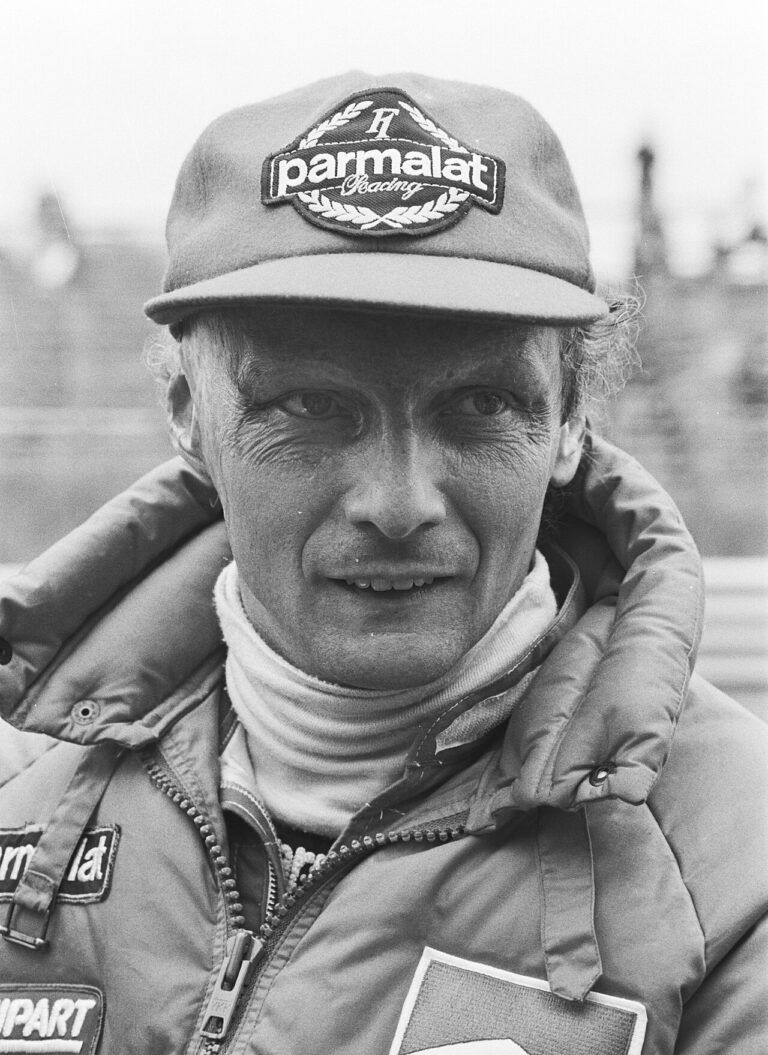
Niki Lauda Net Worth
$200 Million
Racing driver (three-time F1 champion), airline founder, Mercedes F1 chairman Updated November 2026
People With a Similar Net Worth




Niki Lauda’s net worth was about $200 million when he died on May 20, 2019, according to widely reported estimates. GQ Australia put his fortune at about $195.5 million in a ranking cited by PlanetF1 in January 2024, and a GQ Sports ranking cited by RacingNews365 in December 2024 gave about $184 million. No official rich list ever valued him, so all figures are estimates.
Niki Lauda: quick facts
- Net worth
- $200 Million
- Source of wealth
- Airlines, F1 racing
- Profession
- Racing driver (three-time F1 champion), airline founder, Mercedes F1 chairman
- Nationality
- Austrian
- Place of birth
- Vienna, Austria
- Date of birth
- February 22, 1949
- Date of death
- May 20, 2019 (aged 70)
Lauda is one of the few drivers who made more money away from the track than on it. He won the Formula 1 world title three times (1975, 1977 and 1984), but his bigger business was aviation. He founded three airlines: Lauda Air, Niki and Laudamotion.
In his last years he was non-executive chairman and a 10% shareholder of the Mercedes F1 team, which won every constructors’ title from 2014 to 2019. Since his death, his fortune has been held in a private family foundation, and his widow has spent years in court fighting for a larger share.
Niki Lauda at a glance
- Net worth at death: about $200 million (widely reported estimate; GQ figures of $184–195.5 million in 2024)
- Born: February 22, 1949, in Vienna, Austria
- Died: May 20, 2019, in Zurich, Switzerland, aged 70
- Profession: racing driver, airline founder, team executive and TV analyst
- F1 teams: March, BRM, Ferrari, Brabham and McLaren
- Titles: F1 world champion in 1975, 1977 and 1984; 25 Grand Prix wins
- Biggest racing payday: a reported $3 million to return with McLaren in 1982, a record at the time
- Companies: Lauda Air (1979), Niki (2003), Laudamotion (2016)
- Spouses: Marlene Knaus (1976–1991) and Birgit Wetzinger (2008 until his death)
- Children: four (Lukas, Mathias, and twins Max and Mia)
Where Niki Lauda’s money came from
| Source | Details | Estimate |
|---|---|---|
| F1 driving | Salaries from Ferrari, Brabham and McLaren, plus prize money | Up to about $3 million a year by the 1980s |
| Airlines | Built and sold Lauda Air, Niki and Laudamotion | His largest source of wealth; sale prices mostly undisclosed |
| Sponsorship | His famous red cap was paid advertising space | Not disclosed |
| Mercedes F1 | Chairman role and a 10% stake from 2013 | Stake returned to Mercedes in 2020 under an existing contract |
| Media and books | Longtime F1 analyst on German TV, five books, film consulting | Smaller share |
| Investments | Held through the Lauda private foundation, set up in 1997 | Foundation assets estimated at more than €100 million (2025) |
Racing salaries by era
Lauda began his career deep in debt and ended it as one of the best-paid drivers in the sport. Reliable figures exist only for a few seasons.
| Years | Team | Reported pay |
|---|---|---|
| 1971–1972 | March | He paid for the seat with a £30,000 bank loan |
| 1973 | BRM | Bought his drive with a second bank loan |
| 1974–1977 | Ferrari | Salary large enough to clear his racing debts |
| 1978–1979 | Brabham | About $1 million a year |
| 1982–1985 | McLaren | About $3 million to return in 1982 |
Early life
Andreas Nikolaus “Niki” Lauda was born on February 22, 1949, in Vienna. He came from a wealthy family. His grandfather, Hans Lauda, was a well-known Viennese industrialist, and the family’s money came from paper manufacturing.
His family did not want him to race. When they refused to help, Lauda cut off contact and paid his own way. He started in a Mini, moved up to Formula Vee, and then raced private Porsche and Chevron sports cars.
To reach Formula 1, he took out a £30,000 bank loan, secured against a life insurance policy, to buy a seat with March. It was a huge gamble for a driver in his early 20s.
March, BRM and the road to Ferrari
Lauda raced for March in Formula 2 and Formula 1 in 1971 and 1972. The cars were poor, and his debts kept growing. In 1973 he took a second bank loan to buy a drive at BRM.
The bet paid off. His BRM teammate Clay Regazzoni moved to Ferrari and recommended him. Enzo Ferrari signed Lauda for 1974, and the salary was enough to pay off what he owed.
Ferrari champion and the 1976 crash
Lauda won his first world title in 1975. It was also Ferrari’s first constructors’ title in 11 years, and it made him a star in Italy and Austria.
On August 1, 1976, his car crashed and caught fire at the Nürburgring. He suffered severe burns to his head and hands and lung damage from toxic fumes, and a priest gave him the last rites. Remarkably, he was racing again at Monza about six weeks later.
He lost the 1976 title to James Hunt by a single point after withdrawing from the rain-soaked final race in Japan. A year later he won his second title in 1977, then left Ferrari. The rivalry with Hunt was later told in the 2013 film Rush, with Daniel Brühl playing Lauda.
After the crash he wore a cap to cover his scars. That red cap became his trademark, and sponsors paid to put their names on it for the rest of his life.
Brabham, retirement and the McLaren comeback
Lauda joined Brabham for 1978 for about $1 million. Midway through the 1979 season he quit, saying he was tired of driving around in circles, and turned to his airline.
He came back in 1982 with McLaren for a reported $3 million, a record F1 salary at the time. Part of the reason was money: Lauda Air needed cash.
In 1984 he won his third title by just half a point over his teammate Alain Prost, still the closest finish in F1 history. He retired for good at the end of 1985 with 25 Grand Prix wins.
Lauda Air
Lauda founded Lauda Air in April 1979 as a charter airline with two Fokker F27 turboprops. He ran it more closely after retiring from racing in 1985, and it began scheduled flights in 1988, flying long-haul routes with Boeing 767s.
In May 1991, Lauda Air Flight 004 crashed in Thailand, killing all 223 people on board. Lauda personally pushed the investigation, which found that a thrust reverser had deployed in flight, a fault in the Boeing design.
Austrian Airlines became a major shareholder in the 1990s. Lauda sold his shares to Austrian, and by December 2000 Lauda Air was a wholly owned Austrian Airlines subsidiary. The price he received was not made public.
Niki and Air Berlin
Lauda went back into aviation in 2003. He bought assets of the bankrupt Aero Lloyd Austria and launched the low-cost airline Niki, named after himself, in November 2003.
Niki worked closely with Air Berlin from 2004, and Air Berlin took a large minority stake. In November 2011, Lauda’s private foundation handed its remaining 50.1% stake to Air Berlin to repay a loan from the German carrier, with no cash changing hands, and he joined Air Berlin’s board.
When Air Berlin collapsed in 2017, Niki filed for insolvency in December and stopped flying. In January 2018, Lauda’s company won the auction for Niki’s assets, beating British Airways’ owner IAG. The price was not disclosed.
Laudamotion and the Ryanair deal
In 2016 Lauda had taken over the business jet charter company Amira Air and renamed it Laudamotion. It became the vehicle for the Niki assets in 2018.
Within weeks, Lauda brought in Ryanair. The Irish airline agreed in March 2018 to buy just under 25% of Laudamotion for less than €50 million, plus about €50 million in start-up and operating costs. Ryanair raised its stake to 75% in August 2018 and bought out Lauda’s holding company completely in December 2018.
The airline was renamed Lauda in 2019 and stopped flying under its own operation in October 2020. Lauda had sold out of it completely about five months before he died.
Ferrari, Jaguar and Mercedes
Lauda stayed close to the sport after retiring. He worked as a consultant to Ferrari from 1993, helping to rebuild the team before the arrival of Michael Schumacher.
From 2001 to 2002 he ran Ford’s Jaguar F1 team as team principal. It was not a success, and he was let go at the end of 2002. For many years he was also the F1 expert for German broadcaster RTL.
In September 2012 he became non-executive chairman of Mercedes F1. He played a key role in persuading Lewis Hamilton to leave McLaren for Mercedes for 2013. In early 2013 he bought a 10% stake in the team, alongside Toto Wolff.
The timing was perfect. Mercedes won the constructors’ title every year from 2014 to 2019, with Hamilton and Nico Rosberg taking the drivers’ titles and Valtteri Bottas joining in 2017. After Lauda’s death, his son Mathias said the shares would return to Mercedes in 2020 under a contract signed years earlier. Their value was never disclosed.
Big moments for his fortune
- 1974: Ferrari contract clears his racing debts
- 1979: founds Lauda Air
- 1982: about $3 million McLaren deal, a record at the time
- 2000: Lauda Air passes fully to Austrian Airlines
- 2013: buys 10% of Mercedes F1 before its winning run
- 2018: sells Laudamotion to Ryanair in stages
Real estate
Lauda lived mainly in Vienna and on the Spanish island of Ibiza, and he spent time in Switzerland. Prices for his homes were never reliably reported. Since his death, the family foundation has provided homes to his widow and twins.
| Property | Year | Reported price |
|---|---|---|
| Villa in Vienna (used by his widow and twins) | Not reported | Not disclosed |
| Property on Ibiza | Not reported | Not disclosed |
Personal life
Lauda married Marlene Knaus in 1976. They had two sons, Lukas and Mathias, and divorced in 1991. Mathias became a racing driver, and Lukas worked as his manager.
His health suffered for decades after the 1976 crash. He received a kidney from his brother in 1997, and when it failed, flight attendant Birgit Wetzinger donated a kidney to him in 2005. They married in 2008, and their twins, Max and Mia, were born in September 2009.
Lauda had a double lung transplant in 2018. He died in his sleep on May 20, 2019, at the University Hospital of Zurich. After a funeral at St. Stephen’s Cathedral in Vienna, he was buried in his old Ferrari race suit, as he had asked.
Niki Lauda’s estate and the inheritance dispute
Lauda set up a private foundation, the Lauda Privatstiftung, in 1997 to look after his family across generations. Most of his wealth sits there. Austrian media reported in November 2025 that its assets are estimated at more than €100 million.
His will had not been updated since 2007, so the twins were not named in it. His widow, Birgit, sued the foundation for her compulsory share, a portion Austrian law reserves for spouses. Her claims total about €30.5 million: about €22 million from the foundation and €8.5 million from a subsidiary.
The key rulings so far:
- May 2023: a Vienna court rejects the foundation’s argument that she was “unworthy” to inherit
- May 2024: the Higher Regional Court in Vienna upholds her right to a share of roughly one-sixth of the estate
- July 2024: Austria’s Supreme Court rejects a further appeal, sending the case back to set the amount
- 2025: the €8.5 million claim is dismissed at first instance, with about €700,000 in costs; she appeals, and a verdict on the €22 million claim is reported to be close
The foundation, backed by Lukas and Mathias, had accused her of hiding artworks and jewelry from the estate, which she denied. Board member Haig Asenbauer said in late 2025 that the foundation had already paid out more than €30 million since 2019, about half to Birgit and the twins, and that its assets had grown about 20%. These figures come from one side of the dispute. We could not find a final court-set amount as of November 2026.
How Niki Lauda compares
| Driver | Titles | Estimated net worth | Main source |
|---|---|---|---|
| Michael Schumacher | 7 | $600–790 million | Ferrari salaries and endorsements |
| Lewis Hamilton | 7 | About $586 million | F1 salaries, sponsors, fashion |
| Kimi Räikkönen | 1 | $185–255 million | Ferrari and McLaren salaries |
| Niki Lauda | 3 | About $200 million | Airlines and racing |
| Sebastian Vettel | 4 | About $143 million | Red Bull and Ferrari salaries |
Figures are GQ estimates (2024–2025), except Hamilton (Sunday Times Rich List, May 2026). Lauda stands out among the richest F1 drivers because so much of his money came from business. See more athlete net worths or the richest athletes in the world.
Frequently asked questions
What was Niki Lauda’s net worth when he died?
About $200 million, according to widely reported estimates. GQ rankings in 2024 put it at $184–195.5 million.
How did Niki Lauda make his money?
Mainly from his airlines, Lauda Air, Niki and Laudamotion, plus F1 salaries, sponsorship and his role at Mercedes.
Did Niki Lauda own part of Mercedes F1?
Yes. He held about 10% of the team from 2013. After his death the shares went back to Mercedes in 2020 under an earlier contract.
Who bought Niki Lauda’s airline Laudamotion?
Ryanair. It bought a minority stake in March 2018, rose to 75% that August and took full ownership in December 2018.
Who inherited Niki Lauda’s money?
Most of it is held by the Lauda private foundation for his family. His widow Birgit has won the right to a compulsory share of about one-sixth, but the final amount is still being decided in court.
How much did Niki Lauda earn as a driver?
About $1 million a year at Brabham in 1978 and a reported $3 million to join McLaren in 1982, a record at the time.
Sources: GQ Australia via PlanetF1 (January 2024), GQ Sports via RacingNews365 (December 2024), Grandprix.com, Kurier, Krone, Heute, NewsFlix, Kosmo, La Gazzetta dello Sport, Reuters/AFP, Wikipedia. All net worth figures are estimates.