
Marc Rowan Net Worth 2026: Inside the Apollo CEO’s $7.8 Billion Fortune
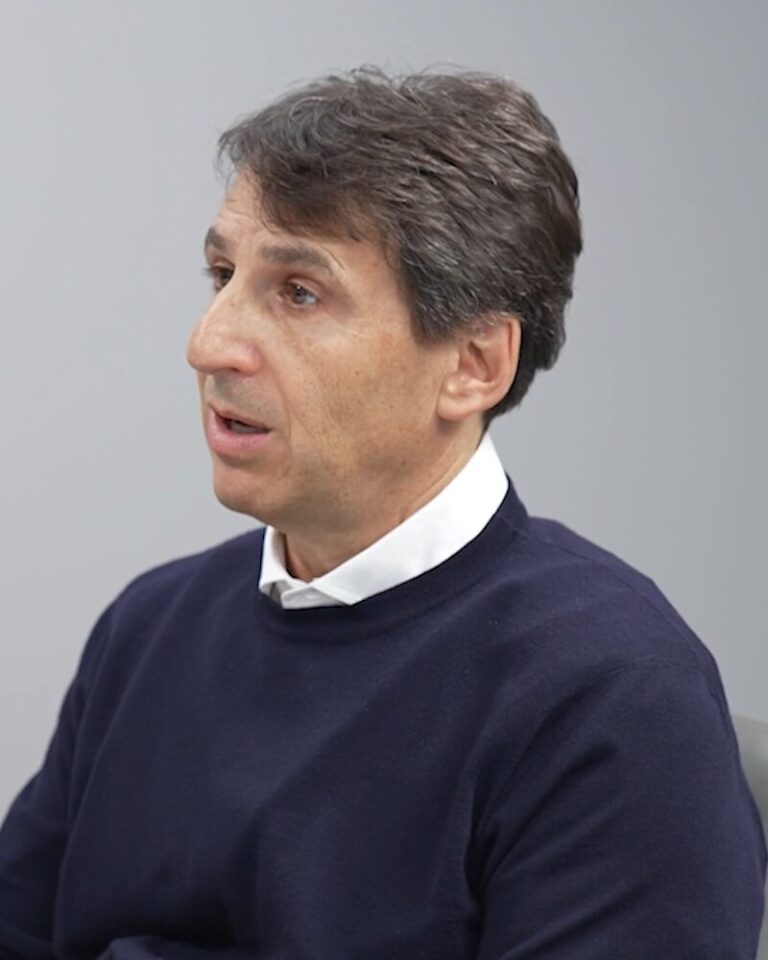
Marc Rowan Net Worth
$7.8 Billion
Private Equity Investor, CEO of Apollo Global Management Updated October 2026
People With a Similar Net Worth







Marc Rowan’s net worth is about $7.8 billion, according to Forbes’ real-time billionaires tracker as of October 12, 2026. That puts the co-founder, chairman and CEO of Apollo Global Management at No. 199 on the 2026 Forbes 400 and around No. 505 among the world’s billionaires.
Marc Rowan: quick facts
- Net worth
- $7.8 Billion
- Source of wealth
- Apollo Global Management
- Profession
- Private Equity Investor, CEO of Apollo Global Management
- Nationality
- American
Almost all of that money comes from one place: a roughly 6% stake in Apollo, the private equity and private credit firm he started in 1990 with Leon Black and Josh Harris. Apollo now manages more than $1 trillion, and Rowan is the executive most closely tied to its shift from buyout shop to giant lender and retirement insurer.
His personal pay is small by Wall Street standards. He takes a $100,000 salary. His wealth rises and falls with Apollo’s share price, which has been volatile in 2026 amid a private credit selloff and renewed questions about the firm’s past ties to Jeffrey Epstein.
Marc Rowan at a glance
- Net worth: about $7.8 billion (Forbes real-time, October 12, 2026)
- Born: 1962; raised on Long Island, New York, and in Hollywood, Florida
- Profession: private equity investor; chairman and CEO of Apollo Global Management
- Key companies: Apollo Global Management, Athene, Athora
- Apollo stake: about 34.1 million shares, or roughly 5.8% of the company
- Salary: $100,000 a year, plus performance-fee awards targeted at $10 million a year
- Education: B.S. (1984) and MBA (1985) from the Wharton School, University of Pennsylvania
- Biggest gift: $50 million to Wharton in 2018, then the school’s largest single donation
- Family: four children with fashion designer Carolyn Pleva
His net worth by year is charted at the end of this article.
Where Marc Rowan’s money comes from
| Source | Details | Estimate |
|---|---|---|
| Apollo shares | About 34.1 million shares of Apollo Global Management (NYSE: APO) | About $4.65 billion at late-August 2026 prices |
| Dividends | Apollo pays a quarterly dividend of $0.5625 per share (2026 rate) | Roughly $75 million a year before tax |
| Past share sales and cash | Decades of Apollo distributions, carried interest and stock sales | Not disclosed; makes up much of the rest |
| Tax receivable agreement | As a former managing partner he shares in 85% of certain Apollo tax savings | Not disclosed |
| Real estate and restaurants | Hamptons and North Fork land, restaurants in Montauk, Sag Harbor and Orient Point | Tens of millions of dollars |
| Salary and awards | $100,000 salary plus performance-fee grants | Small next to his stake |
Apollo stake and compensation
Rowan is unusual among big-company CEOs. He has taken a token salary for years and gets rich through owning Apollo stock, not through annual pay packages. The figures below come from Apollo’s SEC filings and proxy statements.
| Item | Amount | Notes |
|---|---|---|
| Apollo shares owned | 34,058,816 | About 5.77% of the company (May 2026 filing) |
| Value of stake | About $4.65 billion | As of August 30, 2026 |
| Base salary | $100,000 | Set in his 2025 contract |
| Reported total pay, 2024 | $763,381 | Apollo proxy |
| Reported total pay, 2025 | $913,367 | $100,000 salary plus $813,367 in other compensation |
| Performance-fee awards | Target of $10 million a year | Granted yearly for five years; he deferred the first award for three years |
| Charitable fund | $200 million | Donor-advised fund funded by Apollo; Rowan recommends grants |
In January 2025, Apollo’s independent directors approved a new five-year contract for Rowan. Instead of a big stock grant, it gives him yearly rights to a slice of fund performance fees, with a target value of $10 million, and creates a $200 million donor-advised fund funded with Apollo shares. Rowan helps decide where that money goes, which drew criticism from some philanthropy watchers.
A stockholders agreement signed in 2022 also gives Rowan a board nomination right as long as he holds at least $400 million of stock or 10 million shares. In December 2024, Bloomberg reported he had raised cash against part of his holding, a stake then valued at about $431 million.
Early life
Marc Rowan was born in 1962 and grew up in a Jewish family on Long Island, New York. His father worked in auto leasing. His mother, Barbara, was a teacher and a trained concert pianist. His grandfather, Emanuel Stein, was an economics professor at New York University.
The family later moved to Hollywood, Florida, where he finished high school. He then enrolled at the University of Pennsylvania’s Wharton School.
His father died while he was in college, leaving the family short of money. Penn let him finish his studies and pay tuition later. He graduated summa cum laude with a bachelor’s degree in 1984 and an MBA in 1985. A Wharton adviser from the actuarial science department pushed him toward statistics and probability, skills that later shaped Apollo’s insurance business.
Drexel Burnham Lambert
Rowan joined the mergers and acquisitions group at Drexel Burnham Lambert in 1985. Drexel was then the most aggressive firm on Wall Street, led in junk bonds by Michael Milken, whom Rowan has called a mentor.
He worked in New York and Los Angeles under Leon Black, Drexel’s head of M&A. When Drexel collapsed in 1990, Black, Rowan and fellow banker Josh Harris decided to start their own firm.
Founding Apollo (1990–2008)
Apollo opened in 1990. Its early strategy was to buy debt of troubled companies cheaply and then take control of them, a style known as “distressed-to-control.” It bought bond portfolios from the federal Resolution Trust Corporation as the savings-and-loan crisis wound down.
Its first big deal was buying the bond portfolio of failed insurer Executive Life. Rowan has called the deal “an amazing education,” and it gave him an early look at how insurance balance sheets work.
Over the next two decades Apollo became one of the largest buyout firms in the world. Rowan was a senior partner on deals and on the firm’s growing credit business. Apollo listed on the New York Stock Exchange in 2011.
Building Athene (2009–2022)
The move that most shaped Rowan’s fortune came after the 2008 financial crisis. In 2009, insurance executive Jim Belardi approached him about an annuity business modeled on Eli Broad’s SunAmerica. Together they built Athene, a seller of fixed annuities, through a series of acquisitions.
The idea was simple but powerful. Athene collects long-term savings from retirees, and Apollo invests that money in high-quality private loans. That gives Apollo a huge, steady pool of capital and fees. Rowan also helped found Athora, a European insurance group, in 2014.
Athene went public, and by 2021 Apollo owned about 35% of it. In March 2021 Apollo agreed to buy the rest in an all-stock deal valued at about $11 billion, which closed in January 2022. Athene is now the largest U.S. provider of retirement insurance products. Rowan served on Athene’s board from 2009 until August 2025.
Taking over as CEO (2021–present)
Rowan stepped back into a “semi-sabbatical” in 2019 and 2020, spending more time on his Hamptons restaurants. That changed in early 2021. An outside review by law firm Dechert found that Leon Black had paid Jeffrey Epstein $158 million for tax and estate advice, and Black announced he would step down. Rowan became CEO in March 2021.
Josh Harris left soon after, and Apollo’s founding era ended. At his first investor day in October 2021, Rowan set a goal of reaching $1 trillion in assets. Apollo crossed that mark in the first quarter of 2026 and reported about $1.05 trillion at the end of June 2026.
Under Rowan, Apollo has pushed hard into private credit, lending directly to companies instead of leaving that business to banks. Rivals such as Blackstone, KKR and Carlyle have copied the insurance-plus-credit model. Key recent moves include:
- September 2025: closed the $1.5 billion all-stock purchase of Bridge Investment Group, a real estate manager with about $50 billion in assets
- 2025: deployed about $24 billion in real estate credit, a firm record
- August 2026: reported record second-quarter earnings in both asset management and retirement services
- October 2026: began publishing daily valuations for some private credit holdings as regulators urged caution
2026: private credit stress and the Epstein files
2026 has been a rough year for Apollo’s stock, and so for Rowan’s net worth. Private credit funds aimed at individual investors faced a wave of withdrawal requests, and defaults rose on loans to software companies. By early March, Apollo shares were down about 30% for the year.
Rowan said publicly in March that the industry faced a “shakeout” that would not be short-term. In April he said lenders that could not handle the standard 5% quarterly redemption limit on such funds had no business offering them.
The firm also faced fresh questions about Epstein. Justice Department document releases in early 2026 included a 2016 email exchange between Rowan and Epstein about a possible corporate tax inversion, and an instance of Rowan forwarding an internal Apollo tax calculation to Epstein. Apollo shares fell sharply in February 2026 as the stories came out.
In spring 2026, shareholders filed a securities class action in federal court in Manhattan against Apollo, Black and Rowan. It claims Apollo misled investors when it said it had no business dealings with Epstein. All three deny the claims, and the case was pending as of mid-2026. The 2021 Dechert review had found no evidence that Rowan or Harris hired Epstein.
Frank and JPMorgan
Rowan was an early investor in and board member of Frank, a student financial aid startup that JPMorgan Chase bought for $175 million in 2021. Founder Charlie Javice was convicted of fraud in March 2025 for faking customer numbers. Rowan testified for the defense and asked the judge for leniency. In April 2026, he resolved a civil suit JPMorgan had brought against him and other early investors.
Restaurants and other ventures
Outside Apollo, Rowan owns a small hospitality business on the East End of Long Island through Montauk Asset Holdings. He has described getting into restaurants as an accident. His places include:
- Duryea’s Lobster Deck in Montauk, on Fort Pond Bay
- Lulu Kitchen & Bar in Sag Harbor
- Duryea’s Orient Point on the North Fork, bought in 2020
He says he designs the concepts and menus, while partner Steve Jauffrineau, formerly of La Goulue in Manhattan, runs daily operations. He has also served on the boards of several private companies, including Athora and media firms.
Real estate
Rowan’s property holdings are concentrated in the Hamptons and on Long Island’s North Fork.
| Property | Year | Reported price |
|---|---|---|
| Duryea’s site, 65 and 66 Tuthill Road, Montauk | 2014 | $6.3 million |
| 80 Firestone Road, Montauk (Bonzo’s Bungalows) | 2015 | $2.2 million |
| Duryea’s Orient Point | 2020 | Not disclosed |
| Three North Fork land parcels | 2024 onward | $6.5 million combined |
| 100+ acres of shoreline, East Marion | 2026 | $23.5 million, a North Fork land record |
| 322 Meadow Lane, Southampton (sold) | Sold 2012 | $28.5 million sale price |
The East Marion purchase, reported in February 2026, covered 19 parcels west of Truman’s Beach, part of which was once owned by Billy Joel. About 69 acres are protected by conservation easements. Rowan bought the land through a group of LLCs and has not said what he plans to do with it.
His Montauk restaurant property was the subject of a long fight with East Hampton Town. A 2019 settlement legalized table service and required him to install a better septic system and donate land around Tuthill Pond.
Personal life
Rowan married fashion designer Carolyn Pleva, and the couple have four children. Forbes’ current profile lists his marital status as separated. He lives in New York City and spends much of the summer on the East End of Long Island.
Colleagues call him “the professor.” He is known for a quiet, methodical style, open-collared shirts and a small interior office, a contrast with Black’s more lavish approach.
Penn, Wharton and higher education
Rowan has been one of Penn’s most influential alumni. He chaired the Wharton Board of Advisors from 2017 until June 30, 2026, when James Dinan took over.
After a Palestinian literary festival on campus in 2023 and the October 7 attack on Israel, Rowan led a donor campaign against Penn’s leadership. In December 2023, President Liz Magill and board chair Scott Bok both resigned. Rowan then sent trustees a list of proposed reforms.
In October 2025, the Trump administration offered Penn and eight other universities a “Compact for Academic Excellence in Higher Education,” which tied preferential federal funding to governance changes. Rowan wrote in The New York Times that he had played a part in its initial drafting. Critics on Penn’s faculty said it threatened academic freedom.
Political activity
Rowan is a major Republican donor. He and Carolyn gave $1 million to Donald Trump’s 2020 campaign. After the 2024 election, Trump interviewed him for Treasury Secretary, a job that went to Scott Bessent.
In the first half of 2025 alone, Rowan gave more than $3 million to Republican committees and candidates, including $1 million each to the Congressional Leadership Fund and Senate Leadership Fund. In 2026 he gave $1.5 million to the United Democracy Project, AIPAC’s super PAC.
In January 2026, Trump named him to the executive board of the Board of Peace and to the executive board overseeing the administration of Gaza, alongside Marco Rubio, Steve Witkoff and Tony Blair.
Philanthropy
Rowan’s giving focuses on education and Jewish causes. Highlights include:
- $50 million to Wharton (2018) with Carolyn, then the school’s largest gift, funding professorships and the Penn Wharton Budget Model
- Chair of the board of UJA-Federation of New York
- Founding member and chair of the Youth Renewal Fund, and vice chair of Darca, an Israeli school network
- Grant recommendations from a $200 million donor-advised fund funded by Apollo under his 2025 contract
- Giving through the Rowan Family Foundation
How Marc Rowan compares
| Person | Estimated net worth | Main source |
|---|---|---|
| Stephen Schwarzman | About $41.1 billion | Blackstone |
| Leon Black | About $13.8 billion | Apollo co-founder |
| Henry Kravis | About $12 billion | KKR |
| Josh Harris | About $11.7 billion | Apollo co-founder, 26North, sports teams |
| Marc Rowan | About $7.8 billion | Apollo |
Figures are Forbes real-time estimates from October 12–15, 2026. Rowan runs Apollo today, but both of his co-founders are richer. Black built a larger stake and art collection, and Harris added big gains from sports team ownership. For more, see our lists of business people’s net worth and the richest people in the world.
Big moves in Forbes’ estimates of his wealth:
- 2019: $3.2 billion (Forbes 400, No. 251)
- 2021: $4.7 billion after taking over as CEO (Forbes 400, No. 229)
- 2026: $7.8 billion in October, despite Apollo’s stock slump earlier in the year
Frequently asked questions
How much is Marc Rowan worth?
About $7.8 billion, according to Forbes’ real-time estimate on October 12, 2026.
How did Marc Rowan make his money?
Mainly through his stake in Apollo Global Management, the investment firm he co-founded in 1990. He owns about 34 million Apollo shares, roughly 5.8% of the company.
What is Marc Rowan’s salary?
His base salary is $100,000 a year. His 2025 contract adds performance-fee awards with a target value of $10 million a year. Apollo reported his 2025 total pay at $913,367.
Is Marc Rowan richer than Leon Black?
No. Forbes estimates Leon Black at about $13.8 billion, compared with about $7.8 billion for Rowan.
Was Marc Rowan considered for Treasury Secretary?
Yes. Donald Trump interviewed him for the job after the 2024 election, but Scott Bessent was chosen.
What is Marc Rowan’s connection to Penn?
He earned two degrees at Wharton, gave the school $50 million in 2018 and chaired the Wharton Board of Advisors until June 2026. He also led the 2023 donor campaign that preceded President Liz Magill’s resignation.
Sources: Forbes (real-time billionaires data, Forbes 400 lists 2019–2026), Apollo Global Management SEC filings and proxy statements, Bloomberg, Fortune, CNBC, InvestmentNews, Commercial Observer, The Daily Pennsylvanian, The Suffolk Times, East Hampton Star, Dan’s Papers, 27east, Wikipedia. All net worth figures are estimates.
Marc Rowan net worth over time
| Year | Net worth |
|---|---|
| 2026 | $7.8 Billion |
| 2021 | $4.7 Billion |
| 2020 | $4 Billion |
| 2019 | $3.2 Billion |