
Lip-Bu Tan Net Worth 2026: How Intel’s CEO Became a Billionaire Before the Top Job
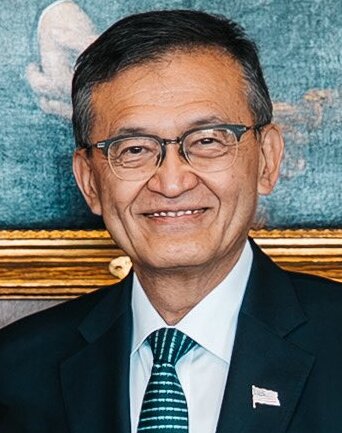
Lip-Bu Tan Net Worth
$1.1 Billion
Business Executive, CEO of Intel, Venture Capitalist Updated October 2026
People With a Similar Net Worth







Lip-Bu Tan’s net worth is about $1.1 billion, according to the Bloomberg Billionaires Index, which first calculated his fortune in August 2025 and called it a minimum figure. That estimate came before Intel’s stock roughly quadrupled, so his true wealth in October 2026 is likely higher.
Lip-Bu Tan: quick facts
- Net worth
- $1.1 Billion
- Salary / earnings
- $1 Million per year
- Source of wealth
- Cadence, Walden International, Intel
- Profession
- Business Executive, CEO of Intel, Venture Capitalist
- Nationality
- American (Malaysian-born)
- Place of birth
- Muar, Johor, Malaysia
- Date of birth
- November 12, 1959 (age 66)
Tan is the CEO of Intel, a job he took in March 2025. Before that he spent 12 years running chip-design software company Cadence Design Systems, where the stock rose more than 4,000% on his watch. He also founded Walden International, one of the first venture capital firms to focus on Asia.
Most of his fortune comes from Cadence shares. His Intel pay package, reported at about $69 million when he was hired and $93 million in Intel’s 2026 proxy, is becoming a bigger part of the story as Intel’s turnaround gains pace.
Lip-Bu Tan at a glance
- Net worth: at least $1.1 billion (Bloomberg Billionaires Index, August 2025)
- Born: November 12, 1959, in Muar, Johor, Malaysia
- Profession: CEO of Intel, venture capitalist
- Key companies: Intel, Cadence Design Systems, Walden International, Walden Catalyst Ventures
- Intel salary: $1 million a year
- Biggest payday: Intel’s 2025 reported pay of about $93 million, mostly stock and options
- Awards: Robert N. Noyce Award (2022), Phil Kaufman Award (2025)
- Spouse: Ysa Loo; two adult children
His net worth over time is charted at the end of this article.
Where Lip-Bu Tan’s money comes from
| Source | Details | Estimate |
|---|---|---|
| Cadence Design Systems stock | Shares earned as CEO (2009–2021) and executive chairman | Remaining stake of about $450–500 million, plus more than $575 million in past sales |
| Intel stock | About 1.3 million shares bought with his own money | Roughly $120 million at October 2026 prices |
| Intel pay package | Salary, bonus, stock awards and options since 2025 | About $93 million reported for 2025 (grant-date value) |
| Walden International and related funds | Venture capital firm he founded in 1987 | Not disclosed; not counted by Bloomberg |
| Board fees | Schneider Electric, Credo, past seats at HPE, SoftBank and others | Smaller share |
Bloomberg left his Walden holdings out of its estimate because his personal stake in those funds is not public. That is one more reason the $1.1 billion figure is a floor, not a ceiling.
Intel pay package
Intel announced Tan as CEO in March 2025, and he took over on March 18, 2025. His offer letter, filed with the SEC on March 14, included:
- Base salary: $1 million a year
- Target bonus: 200% of salary, tied to performance
- Long-term equity: about $66 million in stock awards, options and new-hire grants
- Required purchase: he agreed to buy $25 million of Intel stock with his own money within 30 days and hold it for five years
The package was widely reported as worth about $69 million. Most of it only pays off if Intel’s stock rises sharply. Some performance shares need the stock price to double and beat the S&P 500 before he earns the target amount. Pay advisers estimated that if the stock tripled, the awards could be worth more than $400 million.
2025 compensation from the Intel proxy
Intel’s 2026 proxy statement, filed in March 2026, reported his pay for 2025:
| Item | Amount |
|---|---|
| Salary (partial year) | $746,200 |
| Stock awards | $49.6 million |
| Option awards | $39.5 million |
| Performance cash bonus | $2.4 million |
| All other compensation | $708,000 |
| Total | $93.0 million |
The proxy put his pay at about 812 times that of Intel’s median employee. Because the awards are valued on the grant date, when Intel stock traded near $20, their current value is much higher after the 2025–2026 rally.
Intel shares he owns
Tan has bought Intel stock with his own money twice:
- March 2025: about 1.04 million shares for $25 million, at roughly $24 a share, through a family trust
- August 2026: about 105,600 shares at $95 each in Intel’s large stock offering, a purchase of roughly $10 million to $12 million
Intel’s March 2026 proxy listed him with 1,226,377 Intel shares, held mostly through a trust. With the August purchase, his stake is about 1.3 million shares, worth roughly $120 million at Intel’s mid-October 2026 price of about $90. That figure does not include unvested stock awards or options.
Early life
Lip-Bu Tan was born on November 12, 1959, in Muar, Johor, in what was then the Federation of Malaya, now Malaysia. He was the youngest of five children in a Malaysian Chinese family. His father, Tan Keng Lian, was chief editor of the Chinese-language newspaper Nanyang Siang Pau.
He earned a physics degree from Nanyang University in Singapore in 1978. He then moved to the U.S. and earned a master’s in nuclear engineering from MIT in 1980. He began a PhD but left, and later earned an MBA from the University of San Francisco in 1983. He is a U.S. citizen and has lived in America for more than 40 years.
Walden International: the venture capital years
After early jobs at EDS Nuclear and ECHO Energy, Tan became a partner at the Walden USA investment fund. In 1987, at about 28, he founded Walden International with roughly $20 million. He named it after Henry David Thoreau’s book Walden.
Walden was among the first U.S. venture firms to back technology startups across Asia. Forbes called him “the pioneer of Asian VC” in 2001. Over the years the firm invested about $5 billion in more than 600 companies in 12 countries, with a strong focus on semiconductors.
He remains chairman of Walden International and is a founding managing partner of Walden Catalyst Ventures and Celesta Capital. He also served about 15 years on the board of SMIC, China’s largest contract chipmaker.
Cadence Design Systems: building the Cadence fortune
Tan joined the board of Cadence Design Systems in 2004. Cadence makes software that engineers use to design computer chips. In October 2008, with the company in trouble, he became interim co-CEO, and in January 2009 he was named president and CEO.
Under his leadership:
- Cadence’s revenue roughly doubled
- Its stock rose more than 4,000% between 2009 and 2021
- It became one of the most important companies in the chip industry
He handed the CEO job to his successor in 2021, became executive chairman, and left the board in 2023. Bloomberg estimated in August 2025 that he had sold more than $575 million of Cadence shares and still held a stake worth about $500 million. TheStreet put his remaining 1.4 million Cadence shares at about $451 million in January 2026.
In July 2025, Cadence pleaded guilty to violating U.S. export controls during his time as CEO, over sales to a Chinese military university, and took a charge of about $140.6 million. Tan was not personally charged.
Intel CEO
Tan first joined Intel’s board in 2022. He left in August 2024 after disagreements over strategy. When Pat Gelsinger was pushed out in December 2024, Intel turned to Tan, who was named CEO in March 2025 and rejoined the board.
His early moves included cutting management layers and costs, selling a 51% stake in Altera for about $4.3 billion in net proceeds, and saying Intel would only build new factory capacity when customers commit to it.
Trump’s resignation call and the U.S. government stake
On August 7, 2025, President Donald Trump posted that Tan was “highly conflicted” and must resign immediately. The post followed questions from Senator Tom Cotton about Tan’s past investments in Chinese tech companies. Bloomberg found that his firms had invested in at least 165 Chinese companies.
Tan called the claims misinformation and met Trump at the White House on August 11. Trump reversed course and called Tan’s rise “an amazing story.” Days later, on August 22, 2025, Trump announced that the U.S. government would take a stake in Intel.
The deal turned unpaid CHIPS Act grants into Intel shares. The government received about 433.3 million shares, roughly 10% of the company at the time, for about $8.9 billion. By March 2026 it owned about 8.4% after Intel issued more shares. Other big investors followed:
- Nvidia: a $5 billion investment
- SoftBank: a $2 billion investment
Intel in 2026
Intel’s stock has been one of the biggest stories in tech. After trading near $20 in 2025, it hit a record $142.35 on June 30, 2026. It later pulled back and closed at about $90 on October 16, 2026, giving Intel a market value near $475 billion.
Key 2026 milestones:
- Second quarter: revenue rose 25% to $16.1 billion, and data center sales jumped 59%
- Chip technology: the 18A-P process entered risk production, and 14A is planned for volume production in 2028
- Funding: a stock sale in August 2026 raised about $20 billion to $23 billion at $95 a share
- Board: Craig Barratt replaced Frank Yeary as board chair after the May 2026 annual meeting
Problems remain. The foundry business lost about $2.1 billion in the second quarter, and most of its sales still come from Intel itself. Intel reports third-quarter results on October 29, 2026.
Board seats and other ventures
Tan has served on many corporate boards. Current seats include Schneider Electric and Credo Technology Group. Past seats include Hewlett Packard Enterprise, SoftBank Capital, Ambarella, Flextronics, Inphi, Mindtree and United Overseas Bank.
He also sits on the boards of the UC Berkeley College of Engineering and Carnegie Mellon University. He is a member of The Business Council and the Committee of 100.
Real estate
Tan lives in Piedmont, California, a small, wealthy city surrounded by Oakland in the San Francisco Bay Area. Details of his home purchases have not been publicly reported.
| Property | Year | Reported price |
|---|---|---|
| Family home, Piedmont, California | Not disclosed | Not publicly reported |
Personal life
Tan is married to Ysa Loo, and they have two adult children. He is a Presbyterian Christian and has been an elder at First Presbyterian Church of Berkeley since the 1990s.
He has a reputation as one of the best-connected people in the chip industry. Relationship Science once gave him a perfect “power score” of 100 among technology executives.
Philanthropy
Tan’s giving focuses on engineering education:
- Two endowed computer science professorships at Carnegie Mellon University in 2019, $3 million each, funded with Cadence
- The Tan Endowed Graduate Fellowship in Carnegie Mellon’s electrical and computer engineering department
- S$3 million to Nanyang Technological University in 2024 to create an AI professorship
How Lip-Bu Tan compares
| Chip executive | Estimated net worth | Main source |
|---|---|---|
| Jensen Huang (Nvidia) | About $185.6 billion | About 4% of Nvidia |
| Lisa Su (AMD) | About $3 billion | AMD stock |
| Lip-Bu Tan (Intel) | At least $1.1 billion | Cadence stock, Walden, Intel |
| Brian Niccol (Starbucks, for comparison) | About $200 million | CEO pay |
Figures: Forbes real-time estimates for Huang and Su (October 2026), Bloomberg Billionaires Index for Tan (August 2025) and a networth.com estimate for Niccol (October 2026). Tan is unusual among big-company CEOs because he became a billionaire before taking the top job. Browse more business people net worths, or for the richest tech founders, see Elon Musk’s net worth and the richest people in the world.
Frequently asked questions
What is Lip-Bu Tan’s net worth?
At least $1.1 billion, according to the Bloomberg Billionaires Index’s August 2025 estimate. Intel’s stock has risen sharply since then, so his fortune is likely higher today.
Is Lip-Bu Tan a billionaire?
Yes. Bloomberg first counted him as a billionaire in August 2025, mainly because of his Cadence Design Systems shares.
How much is Lip-Bu Tan paid at Intel?
His salary is $1 million a year. Intel’s 2026 proxy put his total 2025 pay at about $93 million, mostly stock awards and options valued on the grant date.
Why did Trump call for Lip-Bu Tan to resign?
In August 2025 Trump said Tan was “highly conflicted” because of his past investments in Chinese tech companies. After meeting Tan days later, Trump changed his mind and the government took a stake of about 10% in Intel.
How many Intel shares does Lip-Bu Tan own?
About 1.3 million shares. He bought about 1.04 million for $25 million in March 2025 and about 105,600 more at $95 each in August 2026.
What is Walden International?
A venture capital firm Tan founded in 1987. It was one of the first to invest in Asian tech startups and has backed more than 600 companies.
Sources: Bloomberg Billionaires Index (August 2025), Intel offer letter and 2026 proxy statement, SEC Form 4 filings, Forbes, Fortune, Associated Press, TheStreet, Barchart, Tom’s Hardware, Wikipedia. All net worth figures are estimates.