
Stocks Rebound After Fed Rate Hike as Treasury Yields Ease Back Below 5%

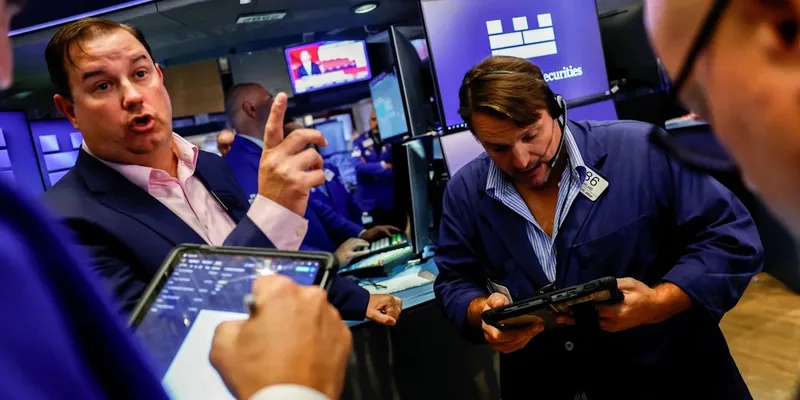
U.S. stocks rose Thursday, Sept. 17, 2026, and Treasury yields pulled back as investors unwound part of the previous session's selloff tied to the Federal Reserve's latest interest rate increase, The Wall Street Journal reported.
The Dow Jones Industrial Average gained 0.70% to 51,820.52, the S&P 500 climbed 1.13% to 7,637.02, and the Nasdaq Composite rose 1.64% to 26,405.38, according to WSJ market data.
The moves reversed a chunk of Wednesday's losses. Stocks and bonds had stumbled after the Fed raised its benchmark rate by a quarter percentage point and signaled at least one more increase this year, the Journal reported.
Warsh's Inflation Warning Rattled Markets Wednesday
Federal Reserve Chair Kevin Warsh told reporters Wednesday that inflation remains "too high and has been for too long," a comment that sent all three major indexes lower for the seventh time in eight sessions, according to Yahoo Finance's republication of Wall Street Journal reporting.
The remarks raised the prospect of additional hikes ahead, a topic covered in detail.
Even so, Warsh's tone reassured some investors that the central bank intends to follow through on curbing inflation.
UniCredit chief economist Marco Valli said the Jackson Hole speech and Wednesday's action marked important steps toward reestablishing policy credibility, the Journal reported.
Treasury yields reflected that shift. The 10-year yield stood at 4.947% Thursday, WSJ data showed, down from a close above 5% in the prior session, its first time above that mark since 2007.
Falling Oil Prices Helped Lift Sentiment
Oil prices dropped after reports of a faster-than-expected recovery in Gulf infrastructure.
Brent crude fell below $104 a barrel in early trading following a Bloomberg report, cited by Yahoo Finance, that Saudi Arabia aims to restore half the capacity of its East-West pipeline within days.
By the U.S. session, WSJ market data showed crude oil down 1.33% to $101.07 a barrel.
Lower oil helped pull yields down further and lifted equities broadly. The Dow had been on pace for its worst start to September since 2008, down 3.2% for the month through Wednesday, Yahoo Finance reported.
What the Moves Mean for Savers and Investors
Volatility eased alongside the rally. The Cboe Volatility Index, or VIX, which measures expected stock market swings, dropped 11.41% to 15.69, according to WSJ data.
Gold rose 0.38% to $4,404.30 a troy ounce and bitcoin gained 0.89% to $76,682.69, WSJ figures showed. The U.S. Dollar Index slipped 0.12% to 96.06 but remained near a seven-week high reached after the Fed's decision.
European markets also advanced, with the Stoxx 600 up 0.6% on gains in banking and technology shares, the Journal reported. Asian markets were mixed.
Hong Kong's Hang Seng index fell 0.6% while Japan's Nikkei 225 added 0.3% ahead of a widely expected Bank of Japan rate decision Friday.
For consumers, the Fed's move this week has direct effects on borrowing costs.