
Vlad Tenev Net Worth 2026: How Robinhood’s CEO Built a $5.9 Billion Fortune
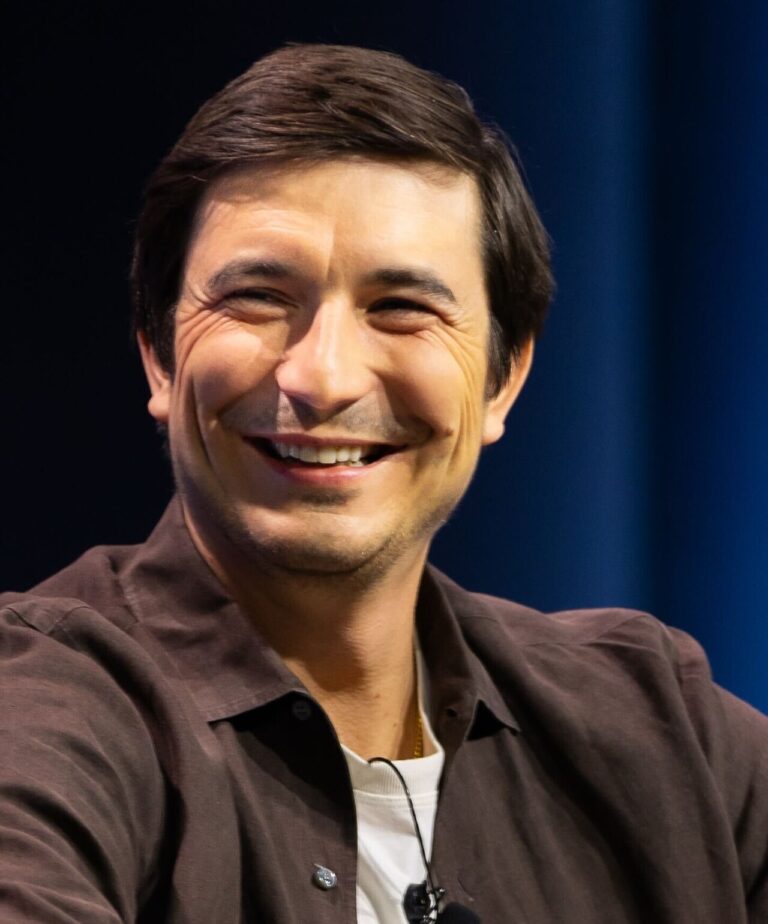
Vlad Tenev Net Worth
$5.9 Billion
Entrepreneur, Co-founder and CEO of Robinhood Updated October 2026
People With a Similar Net Worth








Vlad Tenev’s net worth is about $5.9 billion, according to Forbes’ real-time billionaires tracker on October 18, 2026. A month earlier, on the 2026 Forbes 400 list, Forbes valued him at $7.1 billion. The gap comes from a fall in Robinhood’s share price in October 2026.
Vlad Tenev: quick facts
- Net worth
- $5.9 Billion
- Salary / earnings
- $34.2 Thousand per year
- Source of wealth
- Robinhood Markets
- Profession
- Entrepreneur, Co-founder and CEO of Robinhood
- Nationality
- American, Bulgarian
- Place of birth
- Varna, Varna Province, Bulgaria
- Date of birth
- February 13, 1987 (age 39)
Tenev is the co-founder, chairman and CEO of Robinhood Markets, the trading app that made commission-free stock trading the industry standard. Almost all of his fortune comes from his roughly 6% stake in the company, which went public in 2021 and joined the S&P 500 in September 2025.
His wealth has swung more than most billionaires’. He became a billionaire on paper in 2018, fell below $1 billion in early 2022 when Robinhood’s stock crashed, and then grew his fortune more than sixfold as the shares rebounded in 2024 and 2025.
Vlad Tenev at a glance
- Net worth: about $5.9 billion (Forbes real-time, October 18, 2026)
- Born: February 13, 1987, in Varna, Bulgaria
- Profession: entrepreneur; co-founder, chairman and CEO of Robinhood
- Companies: Robinhood Markets (co-founded 2013); Harmonic, an AI startup (co-founded 2023)
- Co-founder: Baiju Bhatt, his Stanford classmate
- Main asset: about 47.4 million Robinhood Class B shares (about 6% of the company)
- Salary: about $34,000 in 2025; total reported pay of about $3 million
- Education: B.S. in mathematics, Stanford; M.A. in mathematics, UCLA
- Spouse: Celina Tenev, co-founder of the health startup Call9; three children
His net worth by year is charted at the end of this article.
Where Vlad Tenev’s money comes from
| Source | Details | Estimate |
|---|---|---|
| Robinhood stock | About 47.4 million Class B shares held directly | About $5 billion at mid-October 2026 prices |
| Cash from stock sales | Planned sales under a Rule 10b5-1 trading plan since 2025 | Tens of millions of dollars per sale |
| Harmonic | Co-founder and executive chairman of an AI startup valued at $1.45 billion (November 2025) | Stake size not disclosed |
| Salary and pay | Small base salary; most reported pay is security and aircraft costs | About $3 million in total 2025 pay |
Forbes says his roughly 6% Robinhood stake “forms the bulk of his fortune.” When Robinhood’s share price moves 10%, his net worth moves by roughly half a billion dollars.
Robinhood stake and pay
Tenev holds high-vote Class B shares, which give him more voting power than ordinary shareholders. According to an SEC filing dated October 7, 2026, he directly held 47,419,572 Class B shares after his latest sale, plus a small number of Class A shares through a family trust.
Like many founder-CEOs, he takes very little cash salary. Robinhood’s 2026 proxy statement reported:
| Year | Base salary | Total reported pay | Notes |
|---|---|---|---|
| 2024 | Not broken out | About $2.1 million | Mostly security and other costs |
| 2025 | About $34,000 | About $3.0 million | About $2.97 million in “other” pay, including personal security and aircraft costs |
In February 2023, Robinhood said Tenev and Bhatt had agreed to cancel almost $500 million of stock awards granted around the IPO. The awards were tied to very high share-price targets. Cancelling them cut a large non-cash expense from the company’s books.
Recent share sales
Tenev sells stock regularly under a Rule 10b5-1 plan he adopted on September 5, 2025. These plans set sales in advance, so executives cannot time trades on inside information.
- October 5, 2026: 375,000 shares for about $42.6 million, at roughly $113 to $115 a share
- September 2026: a sale worth about $32.5 million, his third of 2026, as reported by crypto and market news outlets
- January 2025: 500,000 shares sold, as reported by MarketBeat
Even after these sales, he still owns tens of millions of shares, so his fortune remains closely tied to Robinhood’s stock.
Early life
Vladimir Tenev was born on February 13, 1987, in Varna, Bulgaria. His parents, who both worked for the World Bank, moved to the United States when he was a toddler. He stayed with his grandparents in Bulgaria until he joined them at about age five.
He has said his parents were careful with money, a habit shaped by the economic turmoil in Bulgaria in the years after communism. He grew up in northern Virginia and attended Thomas Jefferson High School for Science and Technology in Fairfax County, Virginia, one of the most selective public high schools in the U.S.
He studied mathematics at Stanford University, where he met Baiju Bhatt, a physics student. He then earned a master’s degree in mathematics from UCLA in 2008. He started a PhD but left to go into business with Bhatt.
First businesses: Celeris and Chronos Research
In 2010, Tenev and Bhatt founded Celeris, a high-frequency trading software company in New York. By early 2011 they had replaced it with Chronos Research, which sold low-latency trading software to hedge funds and banks.
The work showed them that big trading firms paid almost nothing to buy and sell stocks, while ordinary investors paid commissions of around $7 to $10 a trade. That gap became the idea behind Robinhood. The pair moved to California later in 2011.
Founding Robinhood (2013–2020)
Tenev and Bhatt co-founded Robinhood in April 2013. They have said the 2008 financial crisis and the Occupy Wall Street movement inspired the company’s mission to “democratize finance for all.”
Raising money was hard. Tenev reportedly pitched about 75 investors before the company had enough capital to meet regulatory requirements. To win backing from venture capitalist Tim Draper, the founders agreed to go without salaries until Robinhood received its broker-dealer license.
When Robinhood announced commission-free trading in late 2013, its waitlist exploded. The app launched in beta in December 2014 and officially in March 2015. Its growth pushed big brokers such as Charles Schwab, E*Trade and TD Ameritrade to drop their own commissions in 2019.
Robinhood’s private valuation climbed quickly:
- April 2017: $1.3 billion valuation in a $110 million funding round
- May 2018: about $6 billion valuation, which made Tenev and Bhatt billionaires on paper
- 2020: an $8.3 billion pre-money valuation in a round led by Sequoia Capital
Tenev and Bhatt ran the company as co-CEOs until November 2020, when Tenev became sole CEO and Bhatt became chief creative officer. In December 2020, Robinhood paid $65 million to settle SEC charges that it had misled customers about how it made money from payment for order flow.
GameStop, Congress and the IPO (2021–2022)
In January 2021, retail traders on Reddit drove huge rallies in GameStop, AMC and other “meme stocks,” and much of that trading ran through Robinhood. On January 28, Robinhood restricted buying in some of those stocks.
The company said it had no choice. Its clearinghouse deposit requirement jumped from about $700 million to $3.7 billion in a single day. Robinhood raised $3.4 billion from investors within days to shore up its finances.
Users and politicians were furious. On February 18, 2021, Tenev testified before the House Financial Services Committee. He apologized to customers but said the company had acted to meet its obligations. The saga was later turned into the 2023 film Dumb Money, in which Sebastian Stan played Tenev.
Robinhood went public on the Nasdaq on July 29, 2021, under the ticker HOOD. It raised about $2.1 billion at $38 a share, valuing the company at about $32 billion. The stock fell on its first day, but Bloomberg still valued Tenev at about $2.2 billion.
The shares briefly soared in August 2021, when Forbes estimated Tenev’s fortune at about $4.3 billion. Then they collapsed. By January 2022 the stock was near $14, and Forbes estimated Tenev’s net worth at about $845 million, below the billionaire mark.
The comeback and S&P 500 (2023–2026)
Under Tenev, Robinhood spent 2023 and 2024 widening its product range so it would rely less on trading volumes. It launched a retirement account with a match, the Robinhood Gold Card (March 2024), and bigger crypto and futures offerings.
It also bought several companies:
| Acquisition | Business | Reported price | Completed |
|---|---|---|---|
| X1 | Credit card startup | $95 million | 2023 |
| TradePMR | Wealth management platform | $300 million | 2025 |
| Bitstamp | Crypto exchange | $200 million | 2025 |
| MIAXdx (joint venture with Susquehanna) | Exchange for prediction markets | Not disclosed | January 2026 |
The results showed up in the numbers. Robinhood’s revenue rose from about $2.95 billion in 2024 to about $4.47 billion in 2025, and net income reached about $1.88 billion. Its stock climbed sharply, and the company joined the S&P 500 on September 22, 2025.
That rally lifted Tenev’s fortune more than sixfold in a year. Forbes put him at about $6.1 billion in July 2025 and $5.8 billion on the 2025 Forbes 400, his first appearance on the list.
Prediction markets became Robinhood’s fastest-growing business, bringing in more than $156 million in revenue in the second quarter of 2026, according to Forbes. By September 2026, Forbes valued Tenev at $7.1 billion, ranking him No. 241 on the Forbes 400.
The stock cooled in the fall of 2026. After peaking at about $153 a share within the past year, HOOD fell to around $101 on October 14, 2026, after a Wolfe Research downgrade and weak market sentiment. That drop is why Forbes’ real-time figure slipped to about $5.9 billion.
Harmonic and other ventures
In 2023 Tenev co-founded Harmonic, a Palo Alto AI startup, with CEO Tudor Achim. Tenev serves as executive chairman while still running Robinhood.
Harmonic builds AI that aims for “mathematical superintelligence.” Its model, Aristotle, writes its answers as formal proofs in the Lean programming language so they can be checked by computer, which is meant to reduce AI “hallucinations.” Aristotle posted a top-tier score at the International Mathematical Olympiad in July 2025.
- November 2025: raised $120 million at a $1.45 billion valuation, led by Ribbit Capital
- Total funding: about $295 million across three major rounds in 14 months
- Other investors: Sequoia, Kleiner Perkins and Emerson Collective
Forbes has not published the size of Tenev’s Harmonic stake, so it is not a major part of public estimates of his wealth. If the startup keeps growing, it could become a second source of his fortune.
Baiju Bhatt
Tenev’s co-founder, Baiju Bhatt, stepped down as Robinhood’s chief creative officer in March 2024 but stayed on the board. In October 2024 he launched Aetherflux, a space-based solar power startup. Bhatt also owns about 6% of Robinhood, and Forbes valued him at about $6.6 billion on October 18, 2026, slightly ahead of Tenev.
Real estate
Unlike many tech billionaires, Tenev has no widely reported luxury home purchases. Robinhood is based in Menlo Park, California, but no major property deals in Tenev’s name have been confirmed by reliable outlets. His wealth remains concentrated in Robinhood stock rather than real estate.
Personal life
Tenev is married to Celina Tenev, who co-founded Call9, a startup that provided emergency medical care in nursing homes. The couple has three children.
He is a fitness enthusiast and has said that regular training helps him handle the stress of running a public company. His honors include Forbes 30 Under 30 (2016), the Forbes 30 Under 30 Hall of Fame (2022) and Fortune’s 100 Most Powerful People in Business (2025).
Philanthropy
Tenev’s public giving has been modest compared with his fortune. In 2025 he gave $125,000 to the TJ Partnership Fund, the largest single gift in the history of his old high school, Thomas Jefferson High School for Science and Technology.
He has also spoken often about education in math and finance, including a 2019 commencement speech to UCLA math graduates.
Net worth milestones
- May 2018: becomes a billionaire on paper at a $6 billion Robinhood valuation
- July 2021: about $2.2 billion at the IPO (Bloomberg)
- August 2021: about $4.3 billion at the stock’s peak (Forbes)
- January 2022: about $845 million after the crash (Forbes)
- September 2025: $5.8 billion, debut on the Forbes 400
- September 2026: $7.1 billion on the 2026 Forbes 400
- October 2026: about $5.9 billion (Forbes real-time)
How Vlad Tenev compares
| Person | Estimated net worth | Main source |
|---|---|---|
| Greg Brockman | About $25.5 billion | OpenAI stake |
| Vlad Tenev | About $7.1 billion | Robinhood (about 6%) |
| Baiju Bhatt | About $6.6 billion* | Robinhood (about 6%) |
| Palmer Luckey | About $5.9 billion | Anduril |
Figures are from the 2026 Forbes 400 (valuations as of September 4, 2026), except *Bhatt, whose figure is Forbes’ real-time estimate from October 18, 2026. Tenev was one of only 10 people under 40 on the 2026 list. For a much older finance fortune, see Marc Rowan, or browse more business people and the richest people in the world.
Frequently asked questions
How much is Vlad Tenev worth?
About $5.9 billion, according to Forbes’ real-time tracker on October 18, 2026. Forbes valued him at $7.1 billion on the 2026 Forbes 400 in September.
How much of Robinhood does Vlad Tenev own?
About 6%. An October 2026 SEC filing showed he directly held about 47.4 million Class B shares.
What is Vlad Tenev’s salary?
His base salary was about $34,000 in 2025. His total reported pay was about $3 million, mostly security and aircraft costs.
When did Vlad Tenev become a billionaire?
In 2018, when a funding round valued Robinhood at about $6 billion. He dropped below $1 billion in early 2022 and became a billionaire again as the stock recovered.
Who is richer, Vlad Tenev or Baiju Bhatt?
As of October 18, 2026, Forbes put Bhatt slightly ahead, at about $6.6 billion versus about $5.9 billion for Tenev. Both own about 6% of Robinhood.
What is Harmonic?
An AI startup Tenev co-founded in 2023. It builds math-focused AI that checks its own answers, and it was valued at $1.45 billion in November 2025.
Sources: Forbes (real-time billionaires tracker, Forbes 400 lists 2025 and 2026, January 2022 estimates), Bloomberg Billionaires Index, Robinhood SEC filings and 2026 proxy statement, Tech Funding News, 24/7 Wall St., Wikipedia. All net worth figures are estimates.
Vlad Tenev net worth over time
| Year | Net worth |
|---|---|
| 2026 | $5.9 Billion |
| 2025 | $5.8 Billion |
| 2022 | $845 Million |
| 2021 | $2.2 Billion |