
Ranked: Where Internet Access Costs the Most, as a Share of Income

Key Takeaways
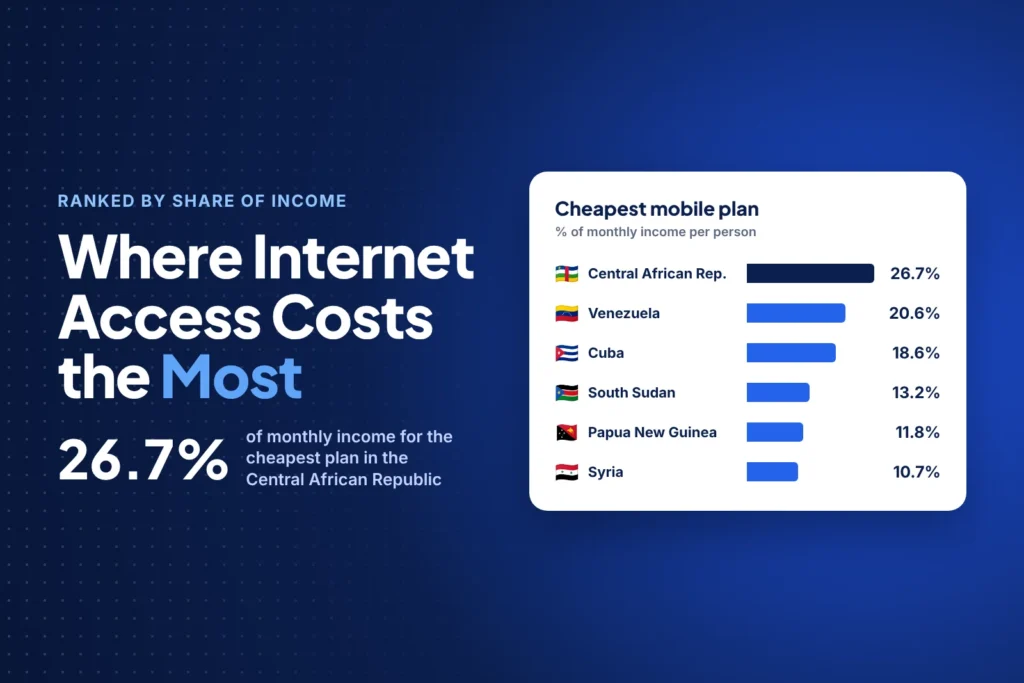
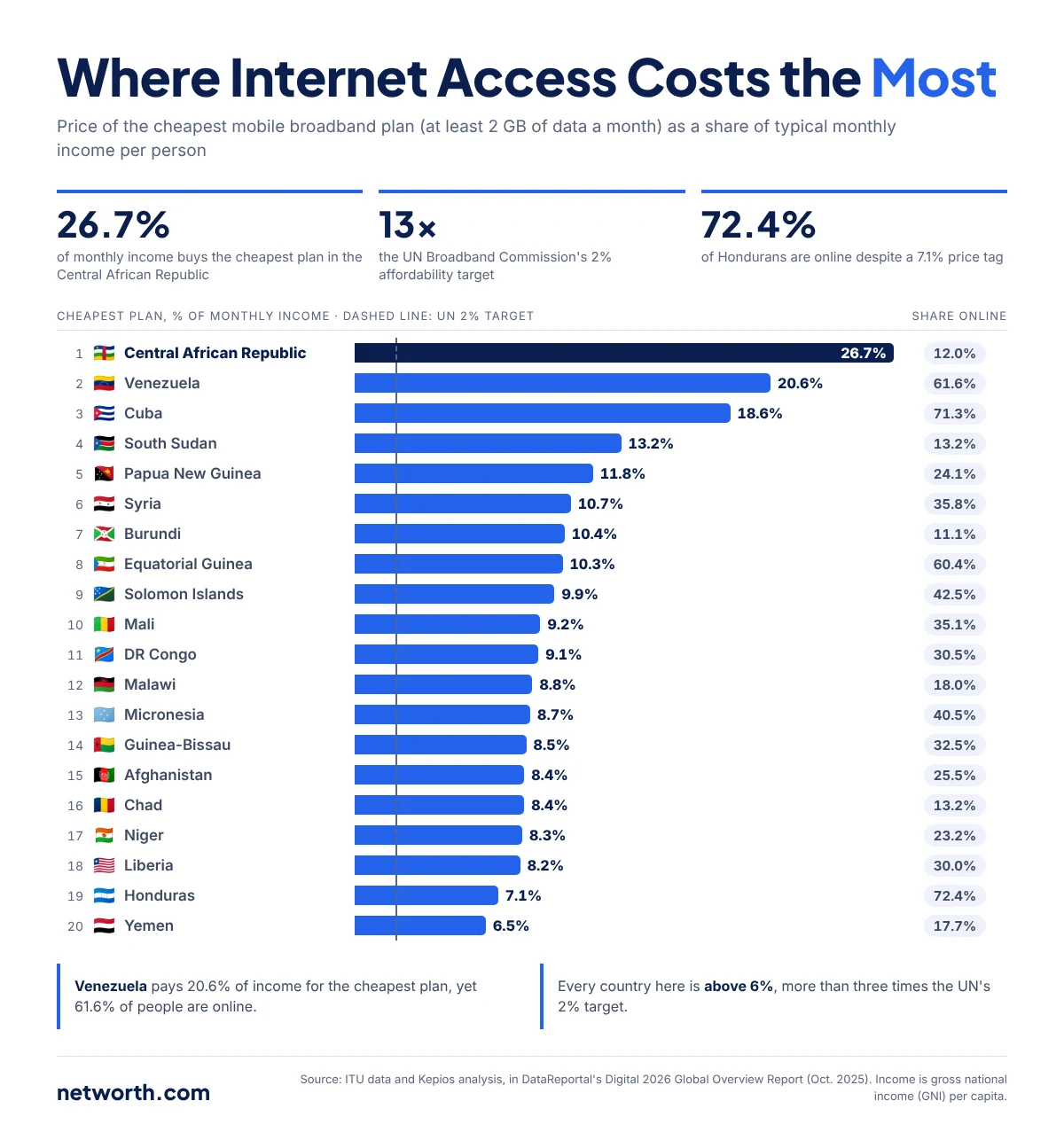
- The cheapest mobile broadband plan costs 26.7% of monthly income in the Central African Republic, where just 12.0% of people use the internet.
- All 20 countries in the ranking charge at least 6.5% of monthly income, more than three times the UN Broadband Commission’s 2% affordability target.
- Price isn’t the whole story: Venezuela (20.6%) and Cuba (18.6%) rank among the most expensive, yet more than 60% of their people are online.
For most households in rich countries, a phone plan is a line item that barely registers. In much of the world, it is closer to rent.
This graphic ranks the 20 countries and territories where the cheapest mobile broadband plan costs the largest share of typical monthly income. The data comes from the International Telecommunication Union (ITU), with analysis by Kepios, published in DataReportal’s Digital 2026 Global Overview Report. Each plan includes at least 2 GB of data a month, and income is measured as gross national income (GNI) per capita.
Where Internet Access Costs the Most
Price of the cheapest mobile broadband plan (at least 2 GB of data a month) as a share of typical monthly income per person
Cheapest plan, % of monthly income · dashed line: UN 2% targetShare online
- 1
 Central African Republic26.7%12.0%
- 2Venezuela20.6%61.6%
- 3Cuba18.6%71.3%
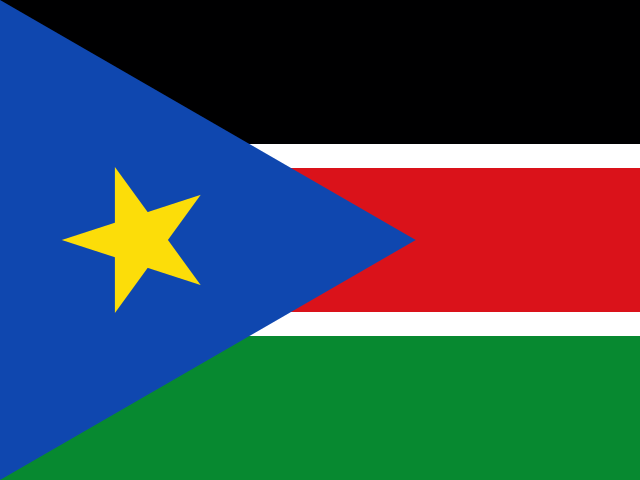
- 4South Sudan13.2%13.2%
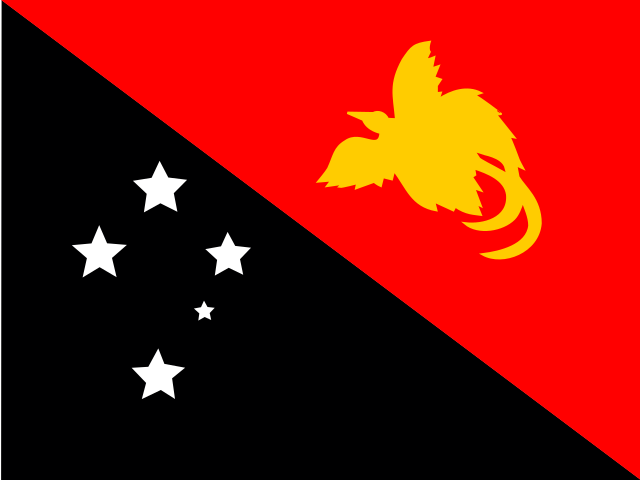
- 5Papua New Guinea11.8%24.1%
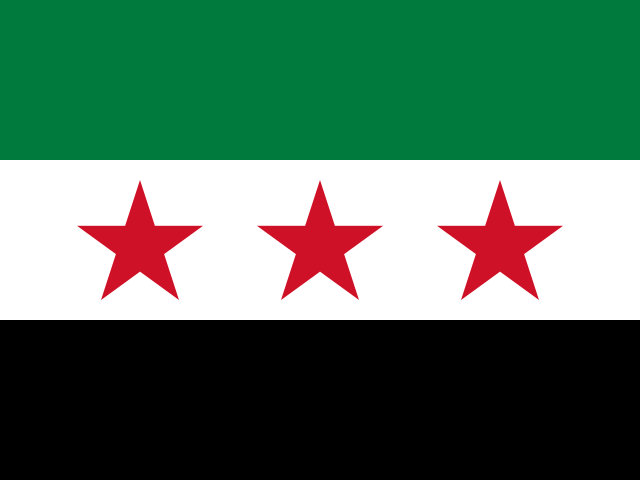
- 6Syria10.7%35.8%
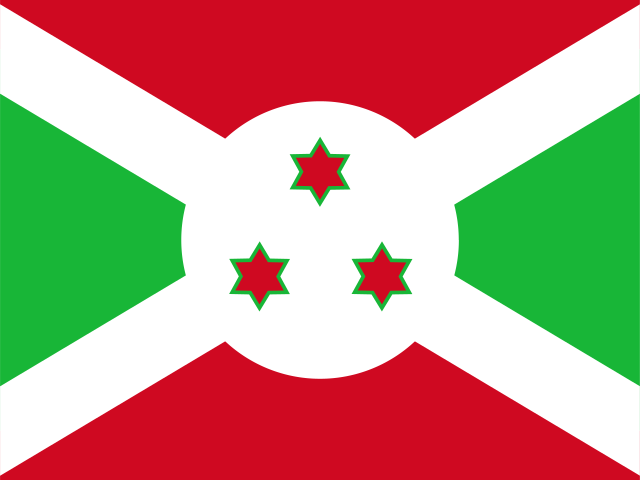
- 7Burundi10.4%11.1%
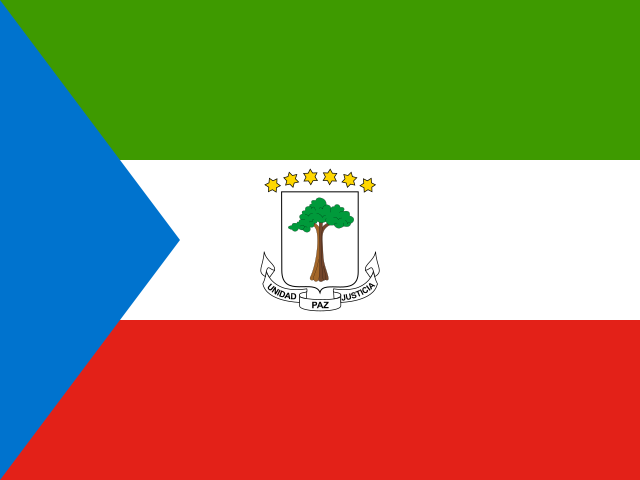
- 8Equatorial Guinea10.3%60.4%
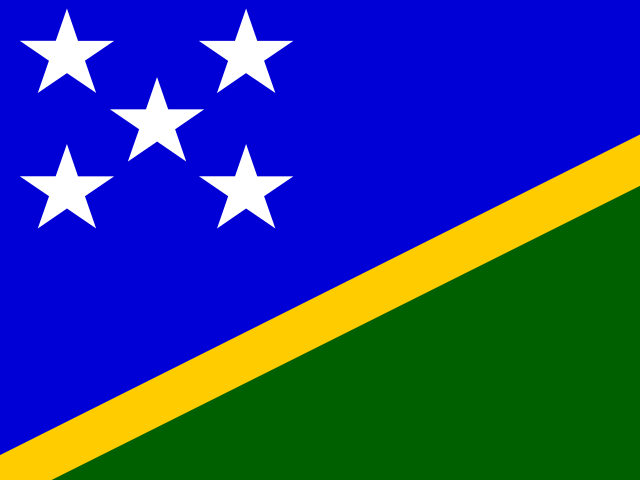
- 9Solomon Islands9.9%42.5%
- 10Mali9.2%35.1%
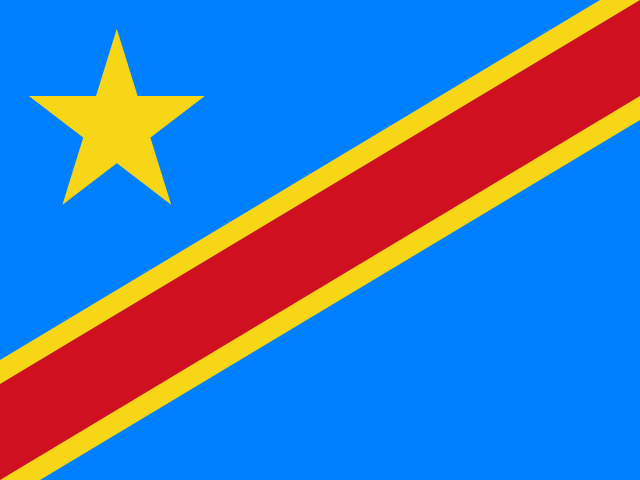
- 11DR Congo9.1%30.5%
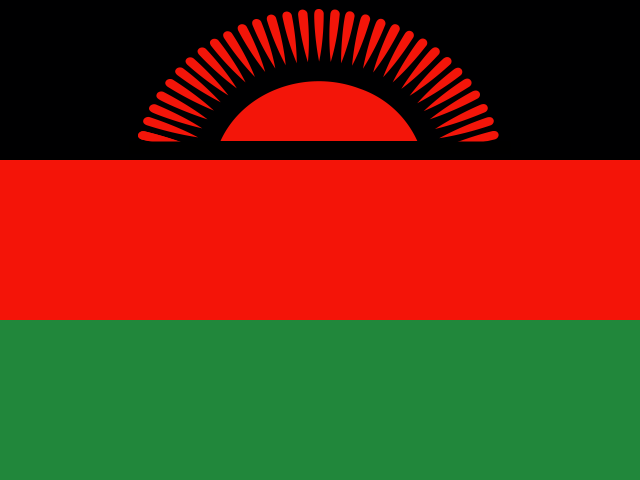
- 12Malawi8.8%18.0%
- 13Micronesia8.7%40.5%
- 14Guinea-Bissau8.5%32.5%
- 15Afghanistan8.4%25.5%
- 16Chad8.4%13.2%
- 17Niger8.3%23.2%
- 18Liberia8.2%30.0%
- 19Honduras7.1%72.4%
- 20Yemen6.5%17.7%


No match.
Venezuela pays 20.6% of income for the cheapest plan, yet 61.6% of people are online.
Every country here is above 6%, more than three times the UN's 2% target.
The 20 Countries Where Internet Access Is Least Affordable
The Central African Republic tops the ranking by a wide margin. Its cheapest plan costs 26.7% of monthly income per person, about 6 percentage points more than second-place Venezuela (20.6%). Cuba (18.6%), South Sudan (13.2%) and Papua New Guinea (11.8%) round out the top five.
| Rank | Country / territory | Cheapest plan, % of monthly income | Share online |
|---|---|---|---|
| 1 | Central African Republic | 26.7% | 12.0% |
| 2 | Venezuela | 20.6% | 61.6% |
| 3 | Cuba | 18.6% | 71.3% |
| 4 | South Sudan | 13.2% | 13.2% |
| 5 | Papua New Guinea | 11.8% | 24.1% |
| 6 | Syria | 10.7% | 35.8% |
| 7 | Burundi | 10.4% | 11.1% |
| 8 | Equatorial Guinea | 10.3% | 60.4% |
| 9 | Solomon Islands | 9.9% | 42.5% |
| 10 | Mali | 9.2% | 35.1% |
| 11 | DR Congo | 9.1% | 30.5% |
| 12 | Malawi | 8.8% | 18.0% |
| 13 | Micronesia | 8.7% | 40.5% |
| 14 | Guinea-Bissau | 8.5% | 32.5% |
| 15 | Afghanistan | 8.4% | 25.5% |
| 16 | Chad | 8.4% | 13.2% |
| 17 | Niger | 8.3% | 23.2% |
| 18 | Liberia | 8.2% | 30.0% |
| 19 | Honduras | 7.1% | 72.4% |
| 20 | Yemen | 6.5% | 17.7% |
Eleven of the 20 countries are in Africa. Three are in Latin America and the Caribbean (Venezuela, Cuba and Honduras), three are Pacific island nations (Papua New Guinea, the Solomon Islands and Micronesia), and the rest are Syria, Afghanistan and Yemen.
Why High Prices Keep People Offline
The countries with the steepest prices also tend to have the fewest people online. In the Central African Republic, 12.0% of the population uses the internet. Burundi (11.1%), South Sudan (13.2%) and Chad (13.2%) are similarly low.
For comparison, 73.2% of the world’s population was online in October 2025, according to the same report, which counted 2.21 billion people still offline.
The UN Broadband Commission’s target is for entry-level broadband in low- and middle-income countries to cost less than 2% of monthly GNI per capita by 2025. In the Central African Republic, the cheapest plan costs more than 13 times that benchmark. Even Yemen, the 20th country on the list at 6.5%, is more than three times above it.
DataReportal notes that cost is often a symptom as much as a cause: the same countries tend to lack other basic infrastructure, which likely pushes up the price of providing a connection in the first place.
The Countries That Get Online Anyway
A few countries break the pattern. Venezuela’s cheapest plan costs 20.6% of income, yet 61.6% of Venezuelans use the internet. Cuba (71.3% online) and Honduras (72.4% online) show the same split between price and use.
Part of the answer is free access. World Bank data cited in the report shows that 23.7% of Venezuela’s internet users go online only through free WiFi, one of the highest rates in the World Bank’s dataset.
What It Means for Your Budget
The same math applies to any household bill: a cost only looks small next to income. A plan priced at 26.7% of monthly income would be like a household earning $5,000 a month paying $1,335 for its phone plan.
That kind of comparison, a bill as a share of income rather than a dollar figure, is the most useful way to judge whether any recurring cost is affordable. It is the same idea behind a household budget, and behind comparing the cost of living by state in the U.S.
About the Data
Prices are for the cheapest non-promotional mobile broadband plan with at least 2 GB of data a month on 3G or better, compared with GNI per capita, which DataReportal uses as a stand-in for typical income. Adoption rates are Kepios estimates of the share of each country’s total population using the internet. All figures are the latest available published data as of October 2025.