
Traders Price 68% Odds of a December Fed Hike From a 3.75% to 4% Rate

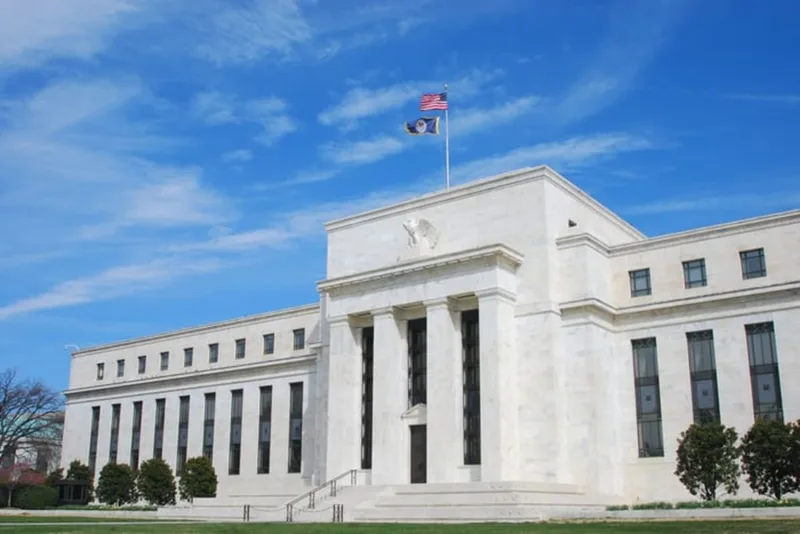
As of Nov. 8, traders see a 68% chance that the Federal Reserve raises interest rates at its Dec. 8-9 meeting, according to CME Group's FedWatch tool as cited by The Motley Fool.
A hike would push the federal funds rate, the Fed's benchmark, above its current range of 3.75% to 4%. Another 32% expect rates to hold, and no one expects a cut.
The Federal Open Market Committee (FOMC), the Fed's rate-setting panel, left rates unchanged at its Oct. 28 meeting. Its latest projections put the median year-end rate at 4.1%, which Motley Fool columnist Dave Kovaleski read as pointing to one more increase this year.
How the December Odds Have Shifted
Motley Fool columnist James Brumley wrote on Nov. 2 that FedWatch showed an 85% chance of a quarter-point December increase, with a couple more likely in the first half of 2027.
Another Motley Fool column, by Keith Speights and carried on Yahoo Finance, cited an 81.2% probability. Speights noted that Fed Chair Kevin Warsh has already presided over one hike in his first few months in the job.
Fed minutes released after the October meeting also pointed toward a year-end increase.
What Is Priced In for 2027
The Fed's dot plot, which charts each policymaker's rate projection, shows rates at 4.1% in 2027. That implies no movement next year if December brings a hike. In CME's poll, 34% expect a 4.25% to 4.50% range by December 2027, which would mean two hikes from today.
Some 33% expect 4% to 4.25%, and 11% expect the current range. Only 1% see rates falling to 3.50% to 3.75%.
Forecasts have reversed before. In December 2025 the Fed cut rates to 3.50% to 3.75%, and policymakers expected another cut in 2026 to 3.25% to 3.50%. The war in Iran intervened, and the Fed raised rates instead.
Kovaleski wrote that tariffs, followed by the war and its effect on energy prices, have pushed inflation higher. In September, the FOMC projected inflation falling to 2.3% by the end of 2027.
What History Says About Hiking Cycles
Speights, citing Goldman Sachs research, reported that the S&P 500 has averaged roughly a 9% gain in the 12 months after a new hiking cycle began. It fell about 2% on average in the first three months.
Goldman also found that unusually rapid hikes have led to worse stock performance.
Schwab said, in analysis cited by Yahoo Finance, that "history suggests slower Fed tightening tends to support stronger market returns and firmer economic growth, while faster hikes typically deepen drawdowns."
In the Fed's March 2022 to July 2023 hiking campaign, the State Street Energy Select SPDR ETF (XLE) rose about 18%, Speights wrote.
Brumley cited Hartford data showing that in years when inflation exceeds 3%, energy stocks beat inflation 74% of the time, with an average 13% gain.
Columnists Weigh Whether to Act
Kovaleski argued that a December hike does not look like the start of the aggressive tightening seen in 2022, when inflation was rising quickly from near-zero rates. He said he would do nothing in response.
He also noted that Democrats won the House and Senate on Nov. 3, and that sentiment to end the war and roll back tariff increases could lead to cuts rather than hikes, though he said that may not happen.
Brumley doubted that real estate and energy funds would repeat their past gains, pointing to crude oil at $100 a barrel since March.
He named the State Street Materials Select Sector SPDR ETF, the ProShares Equities for Rising Rates ETF and the Invesco S&P 500 Quality ETF as funds to consider.