
Fed Finalizes Two Stress Test Rules Expected to Halve Swings in Bank Capital Requirements

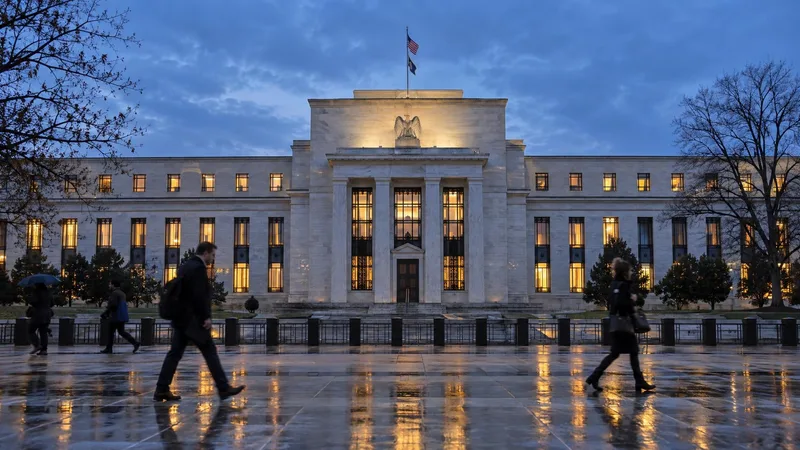
The Federal Reserve Board finalized two rules on Wednesday, Sept. 30, 2026, that change how it runs its annual bank stress test and how it turns the results into capital requirements.
The Fed said the changes are likely to cut year-over-year volatility in those requirements by about 50%.
The Fed said the changes are not expected to materially affect aggregate capital requirements. It also opened a separate proposal on how the test projects banks' fee income.
Two Test Scenarios for Banks With Large Trading Operations
The first rule requires the Board to ask the public for input every year on the test scenarios and on any material changes to its models. It also adopts the models for the 2027 test.
For banks with large trading books, the Fed will now run two global market shocks each year. These are sets of hypothetical shocks to specific markets. The Board will use whichever produces the larger losses for each bank, the Fed said.
Securities.io, citing a Fed staff memo dated Aug. 31, 2026, reported that the window for the shock's as-of date widens from five months to nine months. It will run from April 1 to Dec. 31 of the year before the test.
From the 2028 test, material model changes must be proposed by Aug. 31 of the prior year, with at least 30 days for comment. Model descriptions will be published by May 15.
Averaging Results for the Stress Capital Buffer
The second rule covers the stress capital buffer, a bank-specific cushion of capital above the regulatory minimums. Under the rule, the Board will average results from the two most recent annual tests for banks that took part in both.
Averaging begins in 2028, the Fed said, so that only models that have gone through public comment feed into the calculation.
According to Securities.io, the two years get equal weight, and averaging generally will not apply if a bank materially changes its business plan. The buffer is also subject to a 2.5% floor.
Securities.io also reported that new buffer requirements will take effect Jan. 1 instead of Oct. 1, giving banks three more months to comply. Requirements based on averaged results start Jan. 1, 2029.
What the Changes Mean for Bank Customers
The Fed runs the test to confirm that large banks hold enough capital to keep lending to households and businesses in a severe recession.
Vice Chair for Supervision Michelle W. Bowman said the changes keep the test resilient by making it transparent, granular and sensitive to risk.
Because the Fed expects total capital requirements to hold roughly steady, the main shift is in predictability from one year to the next. The Fed has not said how individual banks' requirements will change.
Proposal on Fee Income
The Board is also seeking comment on a revised model for noninterest income, meaning fees and other revenue that do not come from interest. If adopted, it would replace the current model that projects each bank's fee income under stress.
The Fed said the revision is meant to better capture differences in how banks earn fees.
Comments are due 60 days after the proposal is published in the Federal Register. For the 2027 test, Securities.io reported, the jump-off date is Dec. 31, 2026, and proposed scenarios are due for public input by Jan. 10, 2027.