
10-Year Treasury Yield Hits 5.23%, Its Highest Since 2007, as AI Debt Floods the Bond Market

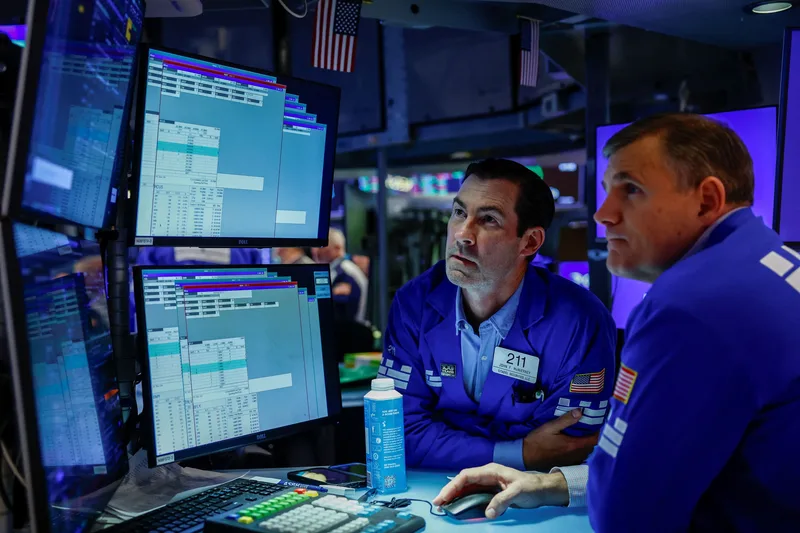
The 10-year Treasury yield, which helps set rates on mortgages and other consumer loans, surged to 5.23% on Friday, its highest level since 2007, according to CNBC. The benchmark yield had traded just below 4.8% earlier this month.
Bond yields move opposite to bond prices.
Sticky inflation and rising bets on another Federal Reserve rate hike are part of the story, CNBC reported, but analysts say heavy government and corporate bond issuance, much of it tied to artificial intelligence spending, has become the bigger driver this year.
Inflation Data and Oil Prices Drove This Week's Spike
The 10-year yield jumped to 5.11% on Wednesday after S&P Global data showed U.S. business activity accelerating at its fastest pace since July 2021, CNN reported.
Input costs rose that month at the steepest rate in four years, partly on higher energy prices, according to CNN.
The data pushed the odds of an October Fed rate hike to 66%, up from 55% a day earlier, based on the CME FedWatch tool cited by CNN. The 2-year Treasury yield, which tracks Fed policy expectations, climbed to 4.9%, its highest level since 2024.
Oil then jumped to as high as $108 a barrel on Thursday after stalled U.S.-Iran talks at the United Nations, NBC News reported (nbcnews). The 30-year Treasury yield hit 5.47% that day, a 22-year high.
Federal Reserve Bank of New York President John Williams said another rate hike could be appropriate by year's end, even as he called the economy resilient.
AI Borrowing Is Adding to Bond Supply
Thierry Wizman, global FX and rates strategist at Macquarie Group, told CNBC that bond issuance, not inflation, is the bigger factor behind this year's climb.
He said the economy is in the middle of an unusually strong investment cycle rather than facing aggressive Fed tightening.
The federal government is issuing debt to cover a large deficit. Companies are also borrowing heavily to fund AI infrastructure, adding new competition for Treasury buyers.
Vanguard estimates that Alphabet, Amazon, Meta Platforms, Microsoft and Oracle issued about $132 billion in debt through July, up from an annual average of roughly $35 billion between 2020 and 2024, per figures cited by CNBC.
Broader AI-related borrowing across chipmakers, utilities and data centers could reach $300 billion to $570 billion this year, according to the same estimates.
Wizman said hyperscalers' spending plans should keep bond issuance elevated into next year. Yields could go higher still, he said.
Higher Yields Are Already Hitting Loan Rates
The average 30-year fixed mortgage rate climbed to 7.37% on Thursday, its highest since May 2024, NBC News reported, extending a run detailed in the mortgage rate jump.
Dominic Pappalardo, chief multi-asset strategist at Morningstar Wealth, told CNBC that mortgage and auto loan rates track the 10-year yield almost in lockstep. Higher costs for borrowers come with an upside for savers.
Steve Laipply, global co-head of iShares Fixed Income ETFs at BlackRock, said the move gives investors "a really strong opportunity to lock in very attractive levels," which he called a generational income opportunity, according to CNBC.
The 30-year yield's own run past 5.4% follows a similar climb covered in the 30-year Treasury surge.
That move came after the Fed's most recent hike lifted the federal funds rate to a range of 3.75% to 4%, its first increase since 2023, a shift chronicled in coverage of the Fed's rate path
Yields on Japan's 10-year bond hit their highest level since 1996 this week, while Germany's 10-year bund reached its highest yield since 2009, NBC News reported.