
Trump Demanded 1% Interest Rates. The Fed Raised Them to Nearly 4% Instead.

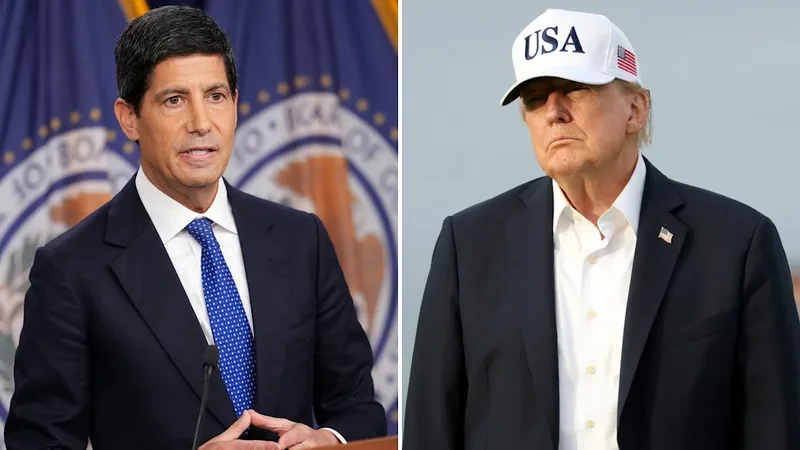
President Donald Trump called for interest rates of 1% or less on Sept. 16, arguing the United States has the best credit in the world, according to Yahoo Finance.
Hours earlier, the Federal Reserve had raised its benchmark rate by a quarter point, to a range of 3.75% to 4.00%. It was the first increase since July 2023.
The gap between what Trump wants and what the Fed delivered is the widest it has been since he installed Kevin Warsh as Fed chairman this spring.
Warsh, confirmed by the Senate earlier this year to succeed Jerome Powell, led a unanimous 12-0 vote to raise rates rather than cut them.
What Trump Said
Trump posted his demand on Truth Social. Interest rates in the United States should be 1%, or less, he wrote, because the country has the best credit in the world by far. He called for rates to be lowered fast, according to Yahoo Finance.
The White House reposted the message on X the same day.
Trump also said the economy is booming with new investment. He argued the U.S. could generate at least $1.5 trillion a year by ending trade with countries it runs deficits with, Gulf News reported.
Why the Fed Moved the Other Way
Warsh told reporters after the meeting that inflation is the Fed's main priority, noting it has run above the central bank's 2% target for more than five years, Yahoo Finance reported.
The Consumer Price Index rose 3.4% year-over-year in August, according to the Bureau of Labor Statistics.
Credit quality and interest-rate policy are different things. The Fed sets its benchmark rate to manage inflation and economic activity.
Treasury borrowing costs, by contrast, are set by financial markets, reflecting inflation expectations, growth and demand for U.S. debt, Gulf News reported. National debt has now crossed $40 trillion.
The dispute turns on that distinction. Trump's credit argument doesn't address why inflation, not creditworthiness, is driving the Fed's rate decisions.
What Comes Next for Rates
The Fed's own projections show little chance of Trump getting his wish soon. Officials see the median federal funds rate holding at 4.1% through the end of 2026 and into 2027, before edging down to 3.9% in 2028, per Gulf News.
Inflation, measured by personal consumption expenditures, is projected to average 3.7% in 2026, then ease to 2.3% in 2027 and 2.1% in 2028. Those figures remain well above the 1% rate environment Trump has demanded.
For borrowers, the immediate effect is steady, not falling, costs on credit cards, auto loans and other variable-rate debt tied to the Fed's benchmark.
The suggests markets should not expect a quick reversal.
Stock investors are also adjusting to the higher-rate backdrop, a shift detailed in .