
How Money Orders Work: Secure Payments Explained

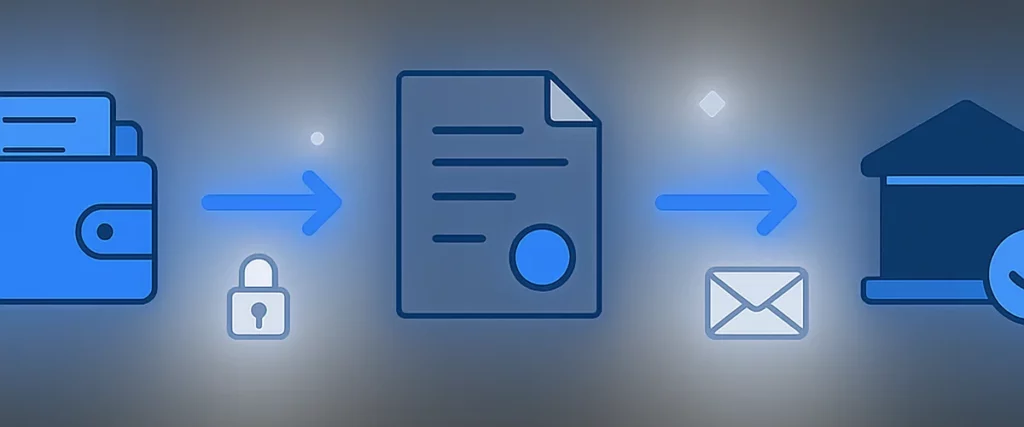
A money order is a paper form of payment that functions similarly to a check but is purchased with cash. It’s a secure way to send money or make payments, especially when a bank account isn’t available or desired. Money orders are issued by third-party distributors in direct exchange for the cash value of the money order, plus a fee. They are considered secure because they are prepaid and cannot bounce due to insufficient funds. New to the instrument itself? Start with our explainer on what a money order is and when it beats a cheque.
How Money Orders Work
Money orders provide a secure method for sending funds or making payments without needing a bank account. They operate much like a prepaid check, ensuring the funds are available before the transaction occurs. Third-party distributors issue these financial instruments, requiring the full cash value of the money order plus a small fee at the time of purchase, according to Citizens Bank. This prepayment mechanism is what makes them secure, as it eliminates the risk of insufficient funds, a common issue with personal checks. If fees like these keep turning up in your month, our budget calculator shows where the money is actually going.
You can typically send up to $1,000 using a single money order, as stated by Citizens Bank. The largest money order available through the USPS is also $1,000. This limit applies to domestic transactions anywhere within the United States, as confirmed by USPS. Once purchased, the money order acts as a guaranteed payment to the recipient, known as the payee. The payee can then cash or deposit the money order at their bank or a participating financial institution.
A key advantage of money orders is their security and reliability. Because they are prepaid, they cannot bounce, providing peace of mind for both the sender and the recipient. Domestic money orders also offer the benefit of never expiring and not accruing interest, according to USPS. This makes them a flexible option for payments that might not be cashed immediately. The process involves purchasing the money order, filling in the recipient’s details, and then providing it to them for cashing.
How to Fill Out a Money Order
Filling out a money order correctly is crucial to ensure your payment reaches the intended recipient safely and efficiently. The first step after purchasing is to clearly write the name of the person or organization receiving the funds, known as the payee. This information should be entered precisely in the designated ‘Pay To’ or ‘Payee’ field on the money order form. Accuracy here prevents the money order from being cashed by an unauthorized individual.
Next, you will need to fill out the name of the financial institution that issued the money order. This detail is often pre-printed or may require you to write in the name of the issuer, such as USPS or Western Union. Following this, you must sign the money order in the appropriate signature line. Your signature authenticates the money order and confirms your intent to transfer the specified funds. It is important to sign it yourself, as an unsigned money order may not be valid.
After completing these steps, you will provide the money order to the payee. Before handing it over, always remember to keep your receipt or the stub attached to the money order. This receipt contains vital information, including the money order number, which is essential for tracking the payment or initiating a trace if it gets lost or stolen. The steps for filling out a money order include purchasing it, filling out the payee’s name, noting the issuing institution, signing it, and then giving it to the payee.
- Purchase the money order with cash or debit card.
- Fill out the name of the person or organization receiving the funds (the payee).
- Fill out the name of the financial institution that issued the money order.
- Sign the money order.
- Provide the money order to the payee.
Money Order Cost and Fees
The cost of a money order is typically a small fee added to the face value of the amount you wish to send. These fees can vary depending on the issuer and the amount of the money order. For instance, a USPS money order for up to $500 costs $2.65, as per the provided data. This makes them an affordable option for smaller transactions, offering a secure payment method without high charges.
If you need to send a larger sum, the fee structure adjusts accordingly. A USPS money order ranging from $500.01 to $1,000 incurs a fee of $3.75, according to the provided table. For military personnel, there’s a specialized rate, with a Postal Military money order costing just $0.85. These varied pricing tiers ensure that money orders remain accessible for different users and their specific needs.
Other providers also offer competitive pricing for their money order services. Western Union, for example, charges a fee of $1 for their money orders. Traditional banks also provide money orders, though their fees might be slightly higher; Chase Bank charges $5 for a money order. When considering a money order, it is wise to compare the fees from different providers to find the most cost-effective option for your specific transaction. The maximum transaction limit for most money orders is $1,000, as stated by Citizens Bank.
| Detail | Figure |
|---|---|
| Money order fee (USPS up to $500) | $2.65 |
| Money order fee (USPS $500.01 to $1,000) | $3.75 |
| Money order fee (Postal Military) | $0.85 |
| Money order fee (Western Union) | $1 |
| Money order fee (Chase Bank) | $5 |
Money Order Pros and Cons
Money orders offer several distinct advantages, making them a popular choice for certain financial transactions. One of the primary benefits is their security; they are prepaid instruments, meaning the funds are guaranteed and cannot bounce due to insufficient funds, as noted by Citizens Bank. This provides peace of mind for both the sender and the recipient. They are also accessible to individuals without bank accounts, offering a vital financial tool for many.
Another significant pro is the ability to send up to $1,000 securely, as highlighted by Citizens Bank and USPS. This makes them suitable for various payments, from rent to online purchases. Furthermore, domestic money orders never expire and do not accrue interest, according to USPS, providing flexibility for the recipient to cash them at their convenience. The cost is also generally low, with fees like $2.65 for a USPS money order up to $500.
However, money orders also come with certain drawbacks. The maximum transaction limit of $1,000, as stated by Citizens Bank, can be a limitation for larger payments, requiring multiple money orders and thus incurring multiple fees. While secure, they can still be lost or stolen, necessitating a trace process that can be time-consuming. Unlike electronic transfers, they are not instantaneous, requiring physical delivery. Additionally, tracking can be less robust compared to digital payment methods, even with a receipt.
Money Order Alternatives
While money orders offer a secure and accessible payment method, several alternatives exist that might be more suitable depending on your specific needs. Cashier’s checks, for instance, are another form of guaranteed payment issued by banks. Like money orders, they are prepaid, ensuring funds are available, but they typically have higher limits and are often used for larger transactions, such as down payments on a home.
Personal checks, while widely used, carry the risk of bouncing if the sender has insufficient funds in their account. However, they offer convenience for those with bank accounts and are generally free or low-cost. Wire transfers provide a fast way to send money, often internationally, but they come with higher fees compared to money orders. Services like Zelle offer instant digital transfers between bank accounts, usually with no fees, but both sender and receiver must be enrolled and have bank accounts.
Credit cards offer convenience and consumer protection for online and in-person purchases, but they involve borrowing money and can incur interest if not paid off promptly. For those without bank accounts or who prefer not to use them, prepaid debit cards can be an alternative, allowing funds to be loaded and spent like a regular debit card. Each alternative has its own set of advantages and disadvantages regarding speed, cost, security, and accessibility, making it important to choose the best fit for your situation.
What is a Money Order Explained
A money order is essentially a prepaid, paper-based financial instrument that functions as a secure alternative to cash or personal checks. It is purchased for a specific amount, up to a maximum of $1,000, as indicated by Citizens Bank and Experian. The key characteristic that defines a money order is its prepayment; the sender pays the full value of the money order plus a small fee at the time of purchase. This ensures that the funds are guaranteed and available when the recipient attempts to cash it.
Money orders are issued by various third-party distributors, including the United States Postal Service (USPS), Western Union, and some banks. This widespread availability makes them accessible to a broad range of individuals, including those who may not have traditional bank accounts. The process involves the sender purchasing the money order, filling in the recipient’s details, and then providing it to the payee. The payee can then present the money order to a financial institution for cashing or deposit.
The security of money orders stems from their prepaid nature, which eliminates the risk of insufficient funds, a common concern with personal checks. They are considered a safe way to send money, particularly for domestic transactions within the United States, where you can send up to $1,000 in a single order, according to USPS. Furthermore, domestic money orders never expire and do not accrue interest, as stated by USPS, adding to their reliability as a payment method.
Frequently Asked Questions
How much does a money order cost? A money order usually costs up to $5 depending on where you buy it and the size of your transaction. For example, the post office charges $2 for money orders up to $500 and $2.90 for money orders between $500 to $1,000. Most banks and outlets that offer money orders require you to pay a small fee for the service, usually between $1 and $5. The fees vary but are typically under $2.
What is the maximum amount for a money order? Money orders typically have a maximum transaction limit of $1,000. The largest money order you can buy through the USPS is $1,000. You can send up to $1,000 in a single order anywhere in the United States.
Can money orders be sent internationally? Money orders can also be sent internationally and can be used to settle debts larger than $1,000 (by sending multiple money orders).
How do I cash a money order? To cash a money order at the post office, you need to take a primary photo ID with the money order to any Post Office location.