
Secured vs. Unsecured Loans: Rates, Requirements, and Risks

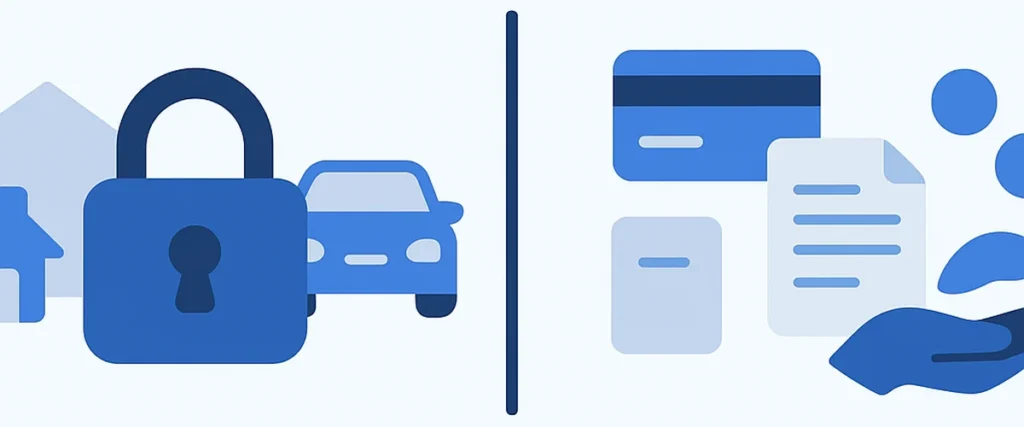
The primary distinction between secured and unsecured loans lies in collateral, which is an asset you own that a lender can seize if you fail to repay the loan. Secured loans require collateral, potentially making lenders perceive borrowers as less risky due to the high stakes involved. Unsecured loans, on the other hand, do not require any collateral.
What Defines Secured and Unsecured Loans?
Secured loans are backed by an asset you own. This asset, called collateral, provides security for the lender. If you cannot repay the loan, the lender can take possession of this collateral. This reduces the lender’s risk significantly.
Common examples of collateral include vehicles, real estate, or savings accounts. The presence of collateral often leads to more favorable loan terms. You are essentially pledging an asset as a guarantee of repayment. This commitment makes the loan less risky for the financial institution, which can translate into benefits for the borrower. For instance, a car loan is typically secured by the vehicle itself, meaning the lender can repossess the car if payments are missed. Similarly, a mortgage uses the home as collateral, providing the lender with a tangible asset to recover losses.
Unsecured loans do not require any collateral. Your promise to repay the loan is the only guarantee. Lenders assess your creditworthiness to determine eligibility. This type of loan relies heavily on your financial history.
Without collateral, the lender faces a higher risk of financial loss. This increased risk is reflected in the loan’s terms. Understanding this fundamental difference is crucial for borrowers. Personal loans and credit cards are prime examples of unsecured debt, where the lender’s decision is based almost entirely on your credit score and income. The absence of collateral means the lender has no specific asset to seize if you default, making your financial reputation the sole basis of trust. This distinction profoundly impacts interest rates and approval criteria for both loan types.
Secured Vs Unsecured Loans: Pros and Cons of Each Loan Type
Secured loans often come with lower average interest rates. This is a significant advantage for borrowers. The collateral reduces the lender’s risk, which translates to better terms for you. You might also qualify for larger loan amounts.
However, a major drawback of secured loans is the risk to your assets. If you default on the loan, the lender can seize your collateral. This could mean losing your car or even your home. Carefully consider this risk before committing. For example, if you take out a secured loan using your savings account as collateral and fail to repay, the lender can directly access those funds. This direct link to your assets means a higher stakes borrowing experience, demanding careful financial planning and a clear understanding of the repayment schedule.
Unsecured loans offer the benefit of not requiring collateral. A lender cannot take your assets if you default on the loan. This provides a layer of protection for your personal property. This can be a comforting thought for many borrowers.
The primary disadvantage of unsecured loans is their higher interest rates. Unsecured loans often have higher interest rates than secured loans, currently above 12 percent on average. They can also have stricter qualification requirements. Lenders may still sue you if you default on an unsecured loan. While your physical assets are safe from direct seizure, a lawsuit can lead to wage garnishment or other legal actions to recover the debt. This means that while the immediate threat to your property is removed, the long-term financial and legal consequences of default can still be severe, impacting your credit score and future borrowing capacity.
Secured Vs Unsecured Loans: Qualification Requirements for Borrowers
Qualifying for a secured loan often depends on the value of your collateral. The lender assesses the asset you offer. They want to ensure it covers the loan amount. Your credit history is still important, but collateral plays a large role.
A strong credit score can improve your chances for better terms. However, collateral can sometimes help borrowers with less-than-perfect credit. It provides an additional layer of security for the lender. This can open doors to financing. For instance, if your credit score is not ideal, offering a valuable asset like a paid-off vehicle as collateral might still allow you to secure a loan that would otherwise be unavailable. The lender views the collateral as a reliable backup, mitigating the risk associated with a less-than-perfect credit history and making the loan more accessible.
For unsecured loans, your creditworthiness is paramount. Borrowers with good to excellent credit usually have the best chance of qualifying. A good FICO credit score is 670 or higher. Lenders scrutinize your credit history and income.
Your income and debt-to-income ratio are also key factors. Lenders want to see that you can comfortably repay the loan. Without collateral, your financial reliability is the main consideration. A strong financial profile is essential for approval. Lenders will meticulously review your payment history, outstanding debts, and income stability to gauge your ability to repay. A high credit score demonstrates a history of responsible borrowing, which is crucial when there is no physical asset to fall back on. This rigorous assessment ensures that only financially sound applicants are approved for unsecured loans, reflecting the higher risk involved for the lender.
How You Can Use Loan Funds
Both secured and unsecured loans offer flexibility in how you use the funds. You can use the money for various personal expenses. This includes consolidating high-interest debt. Many people use loans for home improvements.
Secured loans are often used for larger purchases. Examples include buying a car or a house. These loans are specifically designed for such significant investments. The collateral is typically the item being purchased. For instance, a mortgage is a secured loan where the house itself serves as collateral, allowing you to finance a substantial purchase. Similarly, an auto loan uses the car as collateral, enabling you to acquire a vehicle. The direct link between the loan and the asset makes these loans ideal for major acquisitions, providing the necessary capital with the security of the purchased item.
Unsecured personal loans are versatile for many needs. You might use them for unexpected medical bills. They can also cover educational expenses. Some borrowers use them for major life events, like weddings.
The purpose of the loan generally does not dictate its secured or unsecured nature. Instead, it’s about the presence of collateral. Both types of loans provide financial solutions. Your specific needs will guide your choice. For example, an unsecured personal loan can be used to pay for a child’s tuition, consolidate credit card debt, or even fund a dream vacation. The absence of collateral means the funds are not tied to a specific asset, offering greater freedom in how they are utilized. This flexibility makes unsecured loans a popular choice for a wide array of personal financial needs, from emergencies to planned expenditures.
Understanding Interest Rates and Costs
Interest rates are a critical difference between these loan types. Secured loans have lower average interest rates than unsecured loans. This is due to the reduced risk for the lender. The collateral acts as a safety net.
Unsecured loans often have higher interest rates than secured loans. Currently, these rates are above 12 percent on average. This reflects the increased risk lenders undertake. There is no asset to seize if you default.
Unsecured loans can have fixed rates that typically range from 7% to 36%. Best Egg claims its secured loan annual percentage rates average 20 percent lower than its unsecured loan rates. This demonstrates the potential savings. For example, if an unsecured loan has an APR of 25%, a comparable secured loan might have an APR of 20%, representing a significant difference in the total cost of borrowing. This percentage difference can translate into hundreds or even thousands of dollars saved over the life of the loan, making secured options more attractive for those with collateral.
Beyond interest, consider other costs like origination fees. These fees are charged by the lender for processing the loan. Always compare the annual percentage rate (APR). The APR includes both interest and fees, giving a complete cost picture. Some loans may also include prepayment penalties if you pay off the loan early, or late payment fees if you miss a due date. It is crucial to read the loan agreement carefully to understand all potential costs. A thorough comparison of APRs from multiple lenders will help you identify the most cost-effective option, ensuring you are fully aware of the financial commitment before signing any agreement.
| Detail | Figure |
|---|---|
| Interest rates (unsecured) | Above 12 percent on average |
| Loan amounts (unsecured) | Up to $100,000 |
How to Get a Secured or Unsecured Loan
The application process for both loan types shares some common steps. First, you should pre-qualify. This often involves a soft credit check. It gives you an an idea of potential rates without impacting your credit score.
Next, compare various loan offers from different lenders. Look at interest rates, fees, and repayment terms. This step helps you find the best deal. Do not rush this important comparison phase. For example, one lender might offer a slightly lower interest rate but charge a higher origination fee, making another offer with a slightly higher rate but no fees more attractive overall. Carefully evaluating the annual percentage rate (APR) for each offer, which includes both interest and fees, provides a more accurate comparison of the true cost of borrowing. This diligent research ensures you select a loan that aligns with your financial goals and minimizes long-term expenses.
Once you’re ready to apply, gather necessary documentation. This typically includes W-2s and bank statements. Lenders need to verify your income and financial stability. Having these documents ready streamlines the process.
Finally, complete an application with your chosen lender. For secured loans, you will also need to provide details about your collateral. The lender will then review your application. They will make a decision based on your financial profile and the loan type. This might involve providing proof of ownership for the collateral, such as a vehicle title or property deed, along with an appraisal to determine its value. For both loan types, the lender will conduct a hard credit inquiry, which may temporarily affect your credit score. The final approval depends on meeting all the lender’s criteria, including income verification, credit history, and, for secured loans, the acceptability of the collateral offered.
- Pre-qualify.
- Compare loan offers.
- Once you’re ready to apply, gather documentation, such as W-2s and bank statements, and complete an application with the lender you’ve chosen.
Loan Amounts and Borrowing Limits
The amount you can borrow varies significantly. It depends on the loan type and your financial standing. For secured loans, the value of your collateral is a major factor. Lenders typically won’t lend more than the collateral’s worth.
Your income and credit score also influence secured loan amounts. A higher income and better credit can lead to larger approvals. This is true even with substantial collateral. Lenders want assurance of repayment capacity. For example, if you offer a car valued at $20,000 as collateral, a lender might approve a loan for $15,000 to $18,000, depending on your creditworthiness and income. The lender needs to ensure that if they have to seize the collateral, its sale will cover the outstanding loan amount and any associated costs, making the loan amount directly tied to the asset’s market value and your ability to repay.
For unsecured loans, your creditworthiness is the primary determinant. Personal loan amounts typically range from $1,000 to $100,000. Your income and debt-to-income ratio are crucial. Lenders assess your ability to manage additional debt.
Borrowing limits are set by individual lenders. They consider their risk tolerance and your financial profile. Always borrow only what you can comfortably repay. Over-borrowing can lead to financial strain and potential default. For instance, if your income is substantial and your credit score is excellent, you might qualify for an unsecured personal loan closer to the $100,000 limit. Conversely, someone with a lower income or a less robust credit history might only qualify for a smaller loan, perhaps in the $1,000 to $5,000 range. The lender’s decision is based on a comprehensive evaluation of your financial health, aiming to lend an amount that you can realistically manage without jeopardizing your financial stability or their investment.
Frequently Asked Questions
What is collateral? Collateral is something you own that a lender can take if you don’t repay the loan.
What are the pros and cons of secured loans? Pros include less stringent eligibility requirements. Cons include that collateral can be taken if you default on the loan.
What are the pros and cons of unsecured loans? Pros include that a lender can’t take your assets if you default on the loan (though they may still sue you). Cons include often having higher interest rates than secured loans.
What happens if I default on an unsecured loan? If the loan is in default, which happens 90 days after you miss a payment, it could be sent to collections, and ultimately the collections agency can take you to court.